
Firewalls and Zero Trust Architecture: How They Work Together to Strengthen Security

The importance of regular firewall audits: identifying vulnerabilities before they become a threat
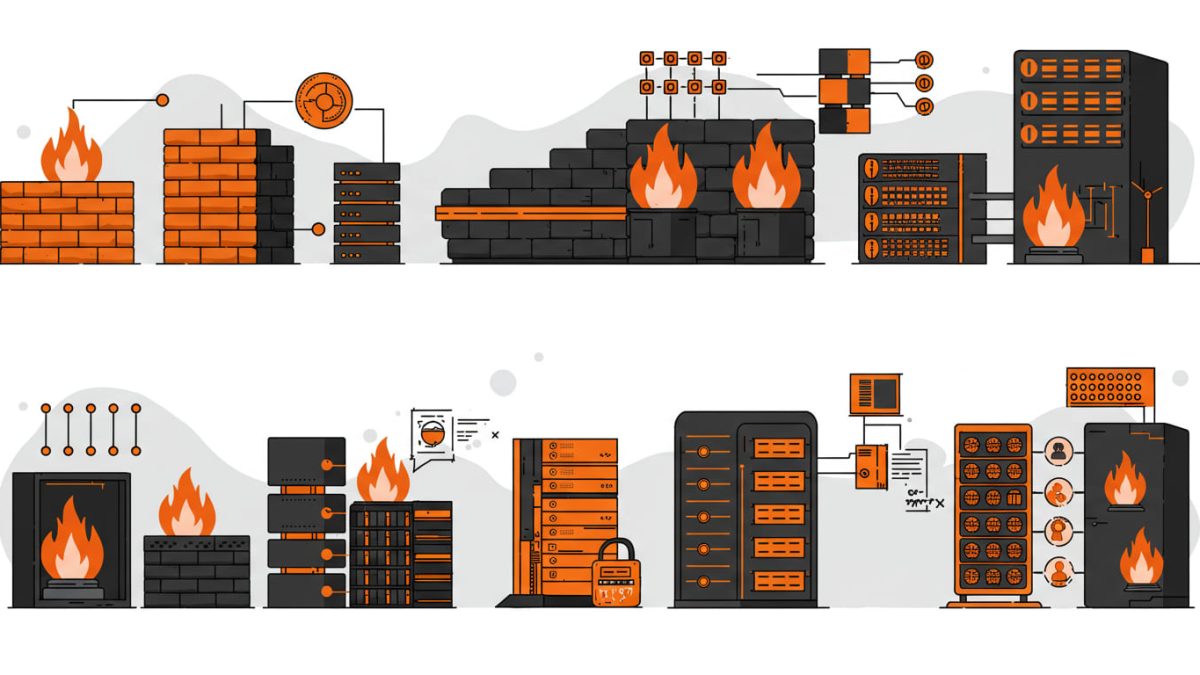
The Evolution of Firewall Technology: From Packet Filtering to Unified Threat Management
Introduction
Firewalls are a fundamental component of network protection, designed to monitor and control incoming and outgoing network traffic based on predefined security rules. Their primary purpose is to create a barrier between a trusted internal network and untrusted external networks, such as the internet, to prevent unauthorized access and potential threats.
Evolution of Firewall Technology
Over the years, firewall technology has undergone significant evolution to address the growing complexity of cyber threats and the increasing demands of network security. This evolution reflects advancements from basic packet filtering methods to more sophisticated solutions like Unified Threat Management (UTM) systems.
Early Firewall Technologies
1. Packet Filtering Firewalls
Packet filtering firewalls are one of the earliest forms of firewall technology. They function by examining packets of data as they travel through the network and making decisions based on predefined rules.
How Packet Filtering Works
- Examine Packet Header: The firewall inspects the header of each packet, which contains information such as the source and destination IP addresses, port numbers, and the protocol used.
- Rule-Based Filtering: Each packet is checked against a set of rules. These rules define criteria for allowing or blocking packets based on their header information. For instance, packets from a specific IP address or destined for a certain port might be permitted or denied based on the rules.
- Stateless Operation: Packet filtering does not maintain the state of connections. Each packet is evaluated independently, without regard to the context of previous packets.
Limitations of Packet Filtering Firewalls
- Limited Inspection: They only inspect packet headers and do not analyze the data within the packets, making them less effective against certain types of attacks.
- No Contextual Awareness: Since packet filtering does not track the state of connections, it cannot determine the legitimacy of packets based on the context of a connection, which may lead to reduced security effectiveness.
- Basic Protection: Offers only a basic level of protection against threats, as it cannot detect more sophisticated attacks that exploit application-layer vulnerabilities.
2. Stateful Inspection Firewalls
Stateful inspection firewalls, also known as dynamic packet filtering, were developed to address the limitations of packet filtering firewalls by maintaining the state of active connections.
How Stateful Inspection Improves Security
- Connection Tracking: Stateful inspection firewalls keep track of the state of active connections. They maintain a table of active connections and use this information to evaluate the legitimacy of incoming packets.
- Contextual Analysis: By considering the state of a connection, stateful inspection firewalls can make more informed decisions. For example, they can ensure that packets belonging to an established connection are allowed while blocking unexpected packets.
- Enhanced Security: Provides better protection than packet filtering firewalls by understanding the context of traffic and tracking connection states.
Benefits and Limitations of Stateful Inspection Firewalls
- Enhanced Security: Offers improved security by considering the state of connections, making it more effective at detecting and blocking unauthorized access.
- Dynamic Filtering: Capable of handling complex network traffic patterns more effectively than packet filtering alone.
- Complexity: More complex to configure and manage compared to basic packet filtering firewalls. Requires proper setup of connection tracking and rules to ensure effective protection.
- Performance Impact: May introduce some latency due to the need to maintain connection state tables and perform more complex checks.
The Emergence of Application Layer Firewalls
Application layer firewalls, also known as proxy firewalls, operate at the application layer of the OSI model. Unlike packet filtering and stateful inspection firewalls, which focus on network and transport layers, application layer firewalls inspect and filter traffic based on application-level protocols and data.
How Application Layer Firewalls Differ from Earlier Types
- Deep Packet Inspection (DPI): Application layer firewalls perform Deep Packet Inspection, which involves analyzing the entire content of packets, not just the headers. This allows them to detect and block threats embedded within the data.
- Application-Specific Filtering: They are capable of filtering traffic based on specific applications and protocols, such as HTTP, FTP, and SMTP. This level of filtering helps address vulnerabilities unique to certain applications.
Features and Advantages
Deep Packet Inspection (DPI)
- Detailed Data Analysis: Application layer firewalls inspect the data within packets, enabling them to detect threats that are not visible through header inspection alone. This detailed analysis helps in identifying malicious content and unauthorized data transfers.
- Enhanced Threat Detection: DPI improves the ability to detect and prevent sophisticated attacks, such as those that exploit application vulnerabilities or use encrypted communication channels.
Application-Specific Filtering
- Granular Control: Application layer firewalls provide control over specific applications and services, allowing organizations to enforce policies tailored to the needs of individual applications. For example, they can block or allow access to specific websites or applications based on content or user activity.
- Protection Against Application-Level Attacks: By understanding and filtering application-level traffic, these firewalls can protect against attacks such as SQL injection and cross-site scripting (XSS) that target application vulnerabilities.
Enhanced Security Compared to Packet Filtering and Stateful Inspection
- Contextual Awareness: Application layer firewalls offer greater contextual awareness by analyzing data content, which enhances their ability to detect complex threats.
- Comprehensive Protection: Provides a higher level of security by addressing both network and application-layer threats, improving overall network security posture.
Challenges and Limitations
Performance Impact
- Latency: The in-depth analysis performed by application layer firewalls can introduce latency into network traffic. The more detailed the inspection, the greater the potential impact on performance.
- Resource Consumption: DPI requires significant processing power and memory, which can affect the performance of the firewall and the overall network.
Complexity of Management
- Configuration Complexity: Managing and configuring application layer firewalls can be more complex compared to packet filtering and stateful inspection firewalls. This complexity arises from the need to set up detailed rules and policies for various applications and services.
- Maintenance Requirements: Regular updates and fine-tuning are necessary to keep up with evolving application threats and to ensure effective protection.
Next-Generation Firewalls (NGFWs)
Next-Generation Firewalls (NGFWs) represent a significant advancement over previous firewall technologies by integrating multiple security features into a single solution. This integration aims to provide more comprehensive protection against modern threats.
Key Features of NGFWs
- Deep Packet Inspection (DPI)
- Continued DPI: NGFWs build on the DPI capabilities of application layer firewalls, offering detailed analysis of packet content to detect and block sophisticated threats.
- Enhanced Detection: DPI in NGFWs helps identify hidden malware and anomalies in network traffic that might be missed by traditional firewalls.
- Intrusion Prevention Systems (IPS)
- Threat Detection and Prevention: NGFWs include IPS functionality to detect and prevent known and unknown threats. IPS systems analyze network traffic for patterns and behaviors associated with attacks.
- Real-Time Protection: Provides real-time analysis and blocking of malicious activities, improving the overall security posture of the network.
- Application Awareness and Control
- Granular Control: NGFWs can identify and control applications running on the network, regardless of port or protocol. This feature allows for fine-grained policies that can manage or restrict application usage based on security needs.
- Traffic Shaping: Enables organizations to prioritize critical applications and limit bandwidth for less important ones, optimizing network performance.
Benefits Over Previous Technologies
Advanced Threat Detection and Prevention
- Comprehensive Protection: NGFWs offer advanced threat detection and prevention capabilities, combining traditional firewall functions with modern security features. This integration helps in identifying and mitigating a broader range of threats.
- Adaptive Security: NGFWs can adapt to new and evolving threats by utilizing updated threat intelligence and advanced detection techniques.
Improved Visibility and Control Over Network Traffic
- Enhanced Monitoring: Provides greater visibility into network traffic, including detailed information about applications, users, and data flows. This visibility helps in understanding network activity and detecting potential security issues.
- Centralized Management: NGFWs offer centralized management tools that simplify the administration of security policies and configurations across the network.
Challenges and Considerations
Cost and Complexity
- Higher Investment: NGFWs generally require a higher investment compared to traditional firewalls due to their advanced features and capabilities.
- Configuration Complexity: Setting up and managing NGFWs can be complex, requiring a thorough understanding of the various security features and how they interact.
Need for Regular Updates and Management
- Ongoing Maintenance: To remain effective against emerging threats, NGFWs need regular updates and maintenance. This includes updating threat intelligence, applying security patches, and adjusting security policies.
- Resource Allocation: Managing and operating an NGFW may require additional resources, including specialized staff and training, to ensure optimal performance and security.
Unified Threat Management (UTM)
Unified Threat Management (UTM) refers to a comprehensive security solution that consolidates multiple security functions into a single platform. The aim of UTM is to provide a unified approach to network security, simplifying management while offering robust protection.
How UTM Integrates Various Security Functions
UTM systems combine several security features, which were traditionally implemented as separate solutions, into a single appliance or software suite. This integration helps streamline security management and improve overall protection.
Key Components of UTM
- Firewall Capabilities
- Core Protection: UTM includes traditional firewall functionalities such as packet filtering and stateful inspection. This foundational protection helps control access to the network and block unauthorized traffic.
- Intrusion Prevention Systems (IPS)
- Threat Detection and Prevention: UTM systems integrate IPS to monitor network traffic for suspicious activity and potential threats. IPS features help detect and prevent attacks in real-time.
- Anti-Malware Protection
- Malware Defense: UTM provides integrated anti-malware capabilities to detect, block, and remove malicious software. This includes protection against viruses, worms, and other types of malware.
- Web Filtering and Email Security
- Content and Communication Protection: UTM systems offer web filtering to block access to harmful or inappropriate websites and email security to prevent phishing and spam. These features enhance protection against web-based and email threats.
Benefits of UTM
Comprehensive Protection in a Single Solution
- Integrated Security: UTM solutions provide a comprehensive security approach by combining multiple security functions into one platform. This integration reduces the need for separate security products and simplifies management.
Simplified Management and Integration
- Centralized Control: By consolidating security features, UTM systems offer centralized management, which simplifies the administration of security policies and settings. This centralization makes it easier to maintain consistent security practices across the network.
Potential Limitations
Over-Reliance on a Single Solution
- Single Point of Failure: Relying on a single UTM solution for all security needs can create a single point of failure. If the UTM system encounters issues or fails, it may impact all integrated security functions.
Complexity in Configuration and Management
- Configuration Challenges: While UTM simplifies management by consolidating security functions, it can also introduce complexity in configuring and managing the various integrated features. Proper setup and ongoing maintenance are essential to ensure effective protection.
Conclusion
Firewall technology has progressed from basic packet filtering to advanced Unified Threat Management (UTM) systems. Initially, packet filtering firewalls offered simple protection by checking packet headers. Stateful Inspection Firewalls improved security by tracking connections for better context. Application Layer Firewalls enhanced protection with detailed, application-specific filtering. Next-Generation Firewalls (NGFWs) integrated multiple security functions like Deep Packet Inspection (DPI) and Intrusion Prevention Systems (IPS) for comprehensive defense.
Today’s UTMs combine various security features into a single, streamlined platform, simplifying management and providing robust protection.
Choosing the right firewall is crucial. Organizations must assess their security needs, consider their IT infrastructure and budget, and select a solution that is scalable and adaptable to future threats. Aligning the firewall technology with organizational requirements ensures effective and resilient network security.