
Designing Future-Proof Firewall Architectures and Migration Strategies for Growing Businesses

The Link Between Clean IT Infrastructure and Effective Cybersecurity Outsourcing
Enterprise-Grade Protection: How Radware Firewalls Integrate with Subscription-Based Security Services
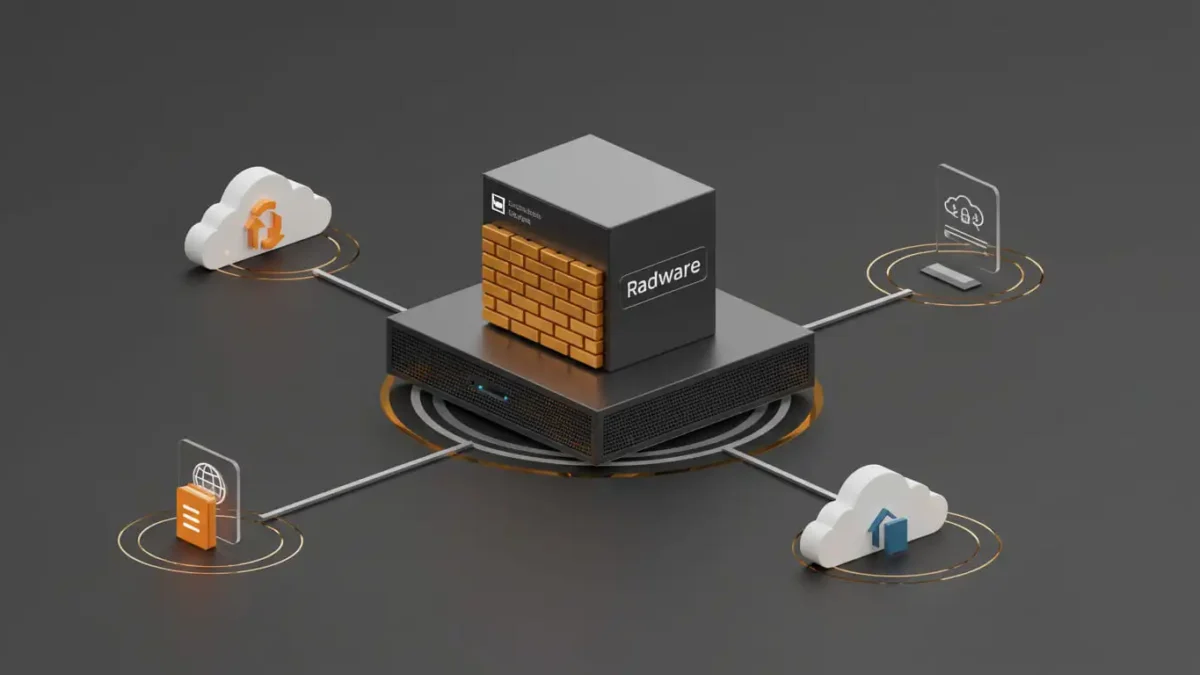
Radware firewall systems function as adaptive threat mitigation platforms incorporating behavioral analytics, deep packet inspection, and real-time anomaly detection. Their architecture supports inline deployment, transparent bridging, and out-of-band monitoring, enabling flexible integration across enterprise perimeter, core, and cloud environments. These systems scale horizontally across clusters while supporting granular policy controls at the application layer.
Core Functional Capabilities of Radware Firewalls
Radware firewalls deliver L3–L7 security through stateful inspection, traffic shaping, and adaptive rule enforcement. Their signature engine leverages heuristics, reputation databases, and zero-day behavioral modeling. Application-layer protection includes protocol validation, HTTP header sanitization, API rate limiting, and TLS decryption with cipher enforcement. SSL inspection integrates with internal PKI to support encrypted traffic filtering without certificate warnings.
Security modules operate in cooperative mode, combining volumetric DDoS filtering, Web Application Firewall (WAF) rules, and content-based injection defense. Systems maintain full-session logging and generate structured telemetry for SIEM integration. Threat detection leverages hybrid detection engines, combining statistical anomaly thresholds with preconfigured rulesets.
Deployment Models and Policy Enforcement
Radware supports deployment in virtual, hardware, and cloud-native environments. Hardware models provide dedicated acceleration for SSL offload and large-scale concurrent session management. Virtualized instances allow integration into NFV infrastructure and cloud VPCs. High availability configurations employ active-active and active-passive clustering, supporting health checks and session persistence synchronization.
Policy enforcement leverages granular rule sets applied to interface groups, object definitions, and identity-linked contexts. Administrative segmentation supports separate policy domains for business units or tenants. Object-based configuration enables scalable reuse and minimizes rule duplication. Application awareness extends to Layer 7 identification using DPI and fingerprinting.
Integration With Network and Security Subscription Services
Radware integrates natively with network and security subscription services, enabling dynamic policy updates, real-time threat feed ingestion, and license scalability. Subscription tiers provide modular access to advanced features such as behavioral DDoS mitigation, zero-day attack intelligence, and adaptive WAF rulesets.
Subscription services support centralized configuration management through Radware DefensePro Manager or third-party orchestration platforms. Dynamic license provisioning allows resource allocation based on site, region, or risk profile. Threat intelligence updates propagate via encrypted channels using certificate-based trust anchors. Environments with distributed firewalls maintain synchronization using Radware’s centralized controller architecture.
Threat Intelligence and Signature Management
Radware’s cloud-based intelligence network aggregates anonymized threat data from customer deployments. This telemetry feeds into a multi-stage analytics pipeline performing behavioral clustering, IP reputation scoring, and anomaly correlation. New signatures are generated based on emerging threat vectors and validated through internal simulation frameworks prior to deployment.
Firewall devices receive delta updates using push-based mechanisms, minimizing downtime and update latency. Signature rollback is supported through policy versioning and rule staging. Context-aware signature application allows selective enforcement by zone or asset classification.
API Exposure and Automation Interfaces
Radware firewalls expose RESTful APIs for policy management, log extraction, and event correlation. Configuration as code practices are supported via JSON/YAML templates. Integration with SOAR platforms enables automated rule adjustments in response to incident detection. API rate limits, audit logging, and token-based authentication enforce administrative control boundaries.
Log forwarding includes support for syslog, CEF, and LEEF formats compatible with major SIEM platforms. Metrics such as dropped packets, threat classification rates, and inspection latency are available through SNMP and API endpoints. Telemetry aggregation supports SLA validation and historical trend analysis.
Performance Optimization and Throughput Engineering
Inspection throughput depends on enabled features, concurrent sessions, and SSL offload utilization. Inline deployments leverage hardware acceleration for DPI and TLS decryption. Latency-sensitive environments implement bypass mode with fail-open fallback for HA configurations. Session memory allocation, queue depth tuning, and CPU affinity improve performance under load.
Quality of Service (QoS) policies enforce bandwidth limits, prioritization, and packet queuing across interfaces. Virtual systems share inspection engines under resource quotas. Event queuing prioritizes threat alerts over informational logs to ensure delivery during high-volume attacks.
Compliance and Audit Capabilities
Radware’s firewall systems support audit-ready policy documentation and rule versioning. Role-based access control (RBAC) enforces administrative privilege separation. Logging granularity aligns with compliance standards including PCI DSS, ISO/IEC 27001, NIST 800-53, and GDPR. Systems retain access logs, policy changes, and system health reports in append-only formats for forensic validation.
Encrypted log export and multi-factor access to administrative consoles support audit trail preservation. Integration with identity providers allows user-specific rule enforcement and access attribution.
Scalability and Multi-Site Deployment
Radware controllers support federated policy management across geographically distributed firewall instances. Shared object libraries, synchronization channels, and rule replication workflows maintain uniform policy enforcement. Licensing and resource provisioning adapt dynamically based on traffic profiles and application growth. VPN and SD-WAN configurations propagate through orchestrated templates.
Central dashboards present aggregated views of threats, policy violations, and system health metrics across sites. Policy conflict detection tools flag overlapping or shadowed rules before deployment.
Alignment With Strategic Security Objectives
Organizations deploying Radware firewall solutions gain centralized policy control, dynamic threat response, and high-performance inspection across diverse infrastructure. Combined with subscription-based security ecosystems, Radware firewalls support continuous enforcement, rapid adaptation to threat evolution, and alignment with enterprise-scale security architecture.