
Why Hiring Firewall Experts Is Crucial for Secure and Efficient Firewall Installation

Enterprise-Grade Protection: How Radware Firewalls Integrate with Subscription-Based Security Services
Designing Future-Proof Firewall Architectures and Migration Strategies for Growing Businesses
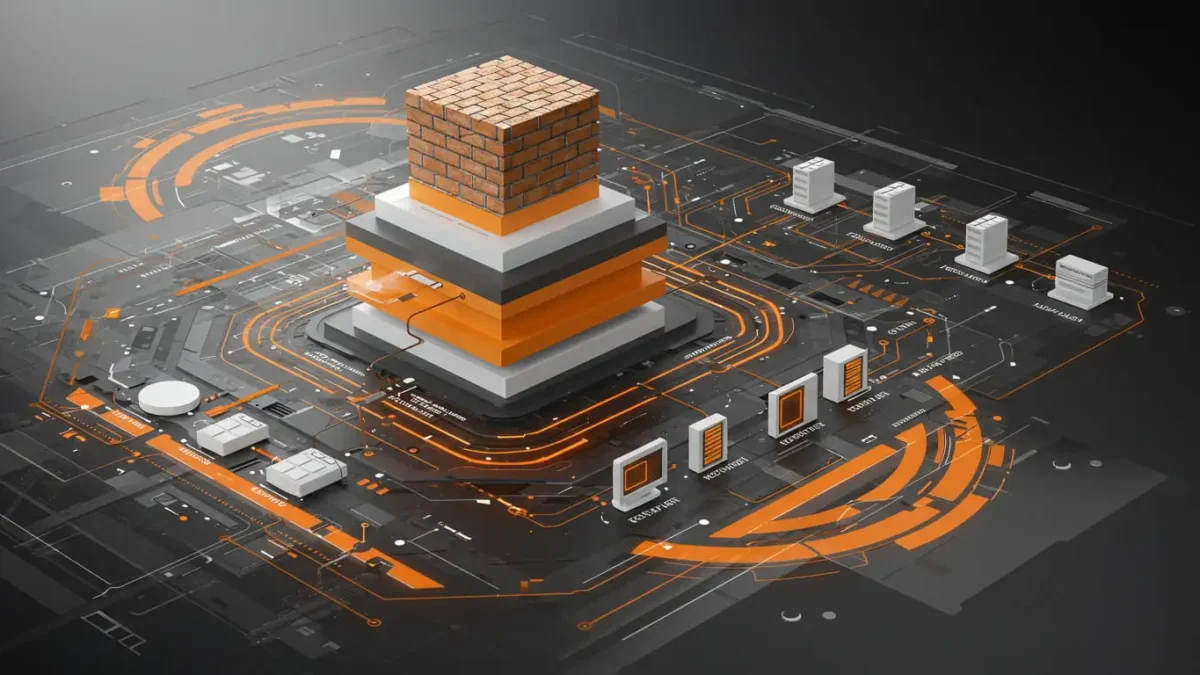
Firewall architecture serves as a foundational control plane in enterprise security frameworks. As digital infrastructure expands, firewall systems must support distributed networks, high availability, application-aware inspection, and integration with dynamic identity and access control mechanisms. Designing scalable, policy-consistent firewall infrastructure enables organizations to reduce attack surface, enforce segmentation, and meet compliance obligations under evolving regulatory and threat conditions.
Architectural Role of Firewalls in Enterprise Networks
Firewalls provide deterministic control over ingress and egress traffic across perimeter, internal, and cloud environments. They enforce segmentation boundaries, regulate protocol-level communications, and filter application-layer data. Firewall architecture includes physical appliances, virtual instances, and cloud-native controls distributed across corporate data centers, branch offices, and public cloud infrastructure.
Common placements include perimeter firewalls controlling internet access, internal segmentation firewalls isolating sensitive data zones, and cloud firewalls governing virtual private networks and cloud workload traffic. Future-proof design requires unified policy enforcement across all enforcement points with centralized visibility and analytics.
Design Principles for Scalable Firewall Deployment
Firewall design must support linear scalability, policy consistency, and administrative separation of duties. Network segmentation should rely on modular zoning, including user zones, application tiers, and service categories. Each segment must adhere to the principle of least privilege through granular rulesets.
Policy abstraction via object groups and reusable rule templates facilitates manageability. Control plane functions (e.g., policy updates, event logging, configuration backups) should operate independently from the data plane to avoid congestion or policy enforcement delays. Vendor-agnostic design facilitates flexibility in sourcing hardware or cloud services.
High Availability and Redundancy Architecture
Firewall resilience requires deployment in high availability (HA) mode with automated failover and stateful session synchronization. Active/active clustering supports load balancing across appliances, while active/passive deployments prioritize failover integrity. Link-state monitoring, health probes, and failover thresholds must be tested during deployment to validate system response to real-world failures.
Stateful HA requires shared session tables, configuration parity, and heartbeat interfaces. Improper failover handling leads to session drops, asymmetric routing, and inspection bypass. Future-proof designs prioritize synchronized logging, NAT consistency, and automatic configuration rollbacks.
Support for Multi-Site and Hybrid Environments
Distributed organizations require firewall deployment models that support centralized control with distributed enforcement. Site-to-site VPNs, SD-WAN overlays, and cloud peering architectures must integrate with firewall rule sets. Cloud-native environments such as AWS Transit Gateway or Azure Virtual WAN impose additional control plane considerations.
Firewall rule propagation across environments must maintain object fidelity, interface mapping, and service group resolution. Virtual appliances and containerized firewalls support microsegmentation in dynamic environments but must still comply with enterprise baseline configurations.
Migration Planning and Deployment Strategy
Firewall migration involves configuration translation, traffic analysis, dependency mapping, and change control. A structured firewall migration plan reduces operational risk by validating rule logic, NAT policies, logging configurations, and interface assignments prior to cutover.
Migration models include parallel deployments, phased transitions, or greenfield provisioning with traffic redirection. Cutover timing must align with change windows and rollback strategies. Log correlation and traffic sampling must confirm policy behavior post-migration. DNS propagation delays, asymmetric routes, and undocumented dependencies represent common causes of firewall migration failure.
Policy and Configuration Standardization
Rule sets must avoid redundancy, shadowed rules, and excessive wildcards. Rule validation tools assist in detecting overlaps, unreachable rules, and improper logging levels. Naming conventions for objects, services, and address groups support long-term maintainability and audit readiness.
Configuration templates ensure consistent application of logging, alerting, inspection, and authentication parameters across all firewalls. Change management workflows include peer review, test environment replication, and automated rollback support. Formal baselining ensures recovery consistency following system failure or compromise.
Performance and Capacity Considerations
Firewall hardware selection must align with projected session counts, throughput, and packet inspection complexity. Application-layer inspection, SSL decryption, and threat intelligence feeds reduce available bandwidth. Capacity planning requires traffic profiling across peak load, average throughput, and burst conditions.
Traffic shaping, Quality of Service (QoS), and inspection offload configurations maintain service levels under congestion. Centralized telemetry and SNMP polling support real-time monitoring and trend analysis. Resource exhaustion—CPU, memory, session tables—must trigger alerts prior to performance degradation.
Interoperability With Broader Security Infrastructure
Firewalls operate as control points within the broader enterprise security stack. Integration with SIEM platforms enables event correlation and anomaly detection. Communication with identity providers supports dynamic policy enforcement based on user, group, or device posture.
SOAR platforms automate incident response based on firewall telemetry. Endpoint detection and response (EDR) solutions may request dynamic rule creation based on threat indicators. Interoperability between firewalls, NAC systems, and VPN concentrators must support policy orchestration at scale.
Regulatory Compliance and Audit Alignment
Firewall controls address requirements in PCI DSS (network segmentation), NIST 800-53 (boundary protection), ISO/IEC 27001 (access control), and GDPR (data access restrictions). Architectural documentation must include topology diagrams, rule set exports, change logs, and access audits.
Log retention policies must comply with data sovereignty laws. Rule change activity must be linked to ticketing systems for traceability. Administrative access requires RBAC enforcement and MFA authentication. Certified professionals must validate configuration integrity during audit cycles.
Post-Migration Optimization and Lifecycle Management
Firewall systems require continuous policy tuning based on business changes, traffic evolution, and threat dynamics. Drift detection tools highlight unauthorized changes, rule misalignments, or failed configuration updates. Scheduled rule reviews remove deprecated objects, expired exceptions, and unused access paths.
Baseline comparison, performance benchmarking, and firmware lifecycle management ensure long-term platform stability. System upgrades must validate rule compatibility, HA synchronization, and management API stability.
Firewall infrastructure must evolve with organizational growth and threat complexity. A modular, standardized firewall architecture paired with a structured migration methodology supports long-term scalability, auditability, and operational resilience.