
Choosing an Enterprise WAF: What Matters Beyond Basic Web Protection

IT Outstaffing vs In-House Hiring: Which Model Scales Better in 2026?

Why Firewall Installations Fail: Common Deployment Mistakes and How to Avoid Them
Introduction: “Installed” Does Not Mean “Secure”
In many organizations, firewall deployment is treated as a finite task: hardware is installed, a virtual appliance is launched, traffic flows, and the project is considered complete. From a security and operational standpoint, this assumption is deeply flawed. A firewall that is technically “up” can still expose the organization to significant risk, cause service disruptions, or become an invisible bottleneck that undermines performance and availability.
Real-world firewall failures rarely stem from defective hardware or software. Instead, they result from design errors, rushed deployment decisions, incomplete understanding of traffic flows, or weak operational processes. These failures may not surface immediately; many remain dormant until a change, an outage, or a security incident reveals them.
This article examines why firewall installations fail in practice, identifies the most common technical and organizational mistakes, and outlines proven methods to avoid them. The focus stays on engineering discipline, deployment methodology, and long-term operational resilience.
What “Failure” Means in Firewall Deployments
Firewall failure is not limited to a complete outage. In practice, it manifests in several ways, each with different consequences.
- Security failure: unintended access, lateral movement, and missed detection/blocking of malicious traffic.
- Operational failure: unstable connectivity, broken apps, intermittent access, VPN instability.
- Performance failure: latency spikes, throughput collapse under inspection, session table exhaustion.
- Governance failure: undocumented rules, unclear ownership, exception creep, and audit difficulty.
Avoiding these failures requires addressing more than configuration syntax: it requires correct design, validation, and continuous operations.
Pre-Deployment Mistakes That Set Projects Up for Failure
Lack of Traffic and Application Visibility
A firewall cannot enforce meaningful policy without understanding what it protects. Organizations frequently deploy firewalls without a clear inventory of applications, services, and dependencies. This pushes teams toward permissive rules created under pressure to “make it work.”
A discovery phase should map:
- Critical applications and their communication patterns
- North-south versus east-west traffic
- External dependencies such as APIs, SaaS services, and partner connections
Without a baseline, firewall policy becomes reactive instead of intentional.
Incorrect Architectural Placement
A firewall deployed in the wrong position cannot deliver the intended security outcome. For example, a perimeter-only deployment may not provide meaningful internal segmentation, while forcing too much internal traffic through a single choke point can degrade performance.
Architecture must align with the threat model: data center edge, internal segmentation, cloud perimeter, remote access, and hybrid scenarios all impose different requirements.
Underestimating Policy Lifecycle Complexity
Firewall rules rarely remain static. Temporary exceptions become permanent, application behavior changes, and business requirements evolve. Without clear ownership and review cycles, policy sprawl becomes inevitable.
The Most Common Firewall Deployment Mistakes
Routing and Interface Design Errors
Routing mistakes are among the most disruptive failures. Incorrect default routes, missing return paths, or asymmetric routing can cause traffic to work intermittently or fail entirely. These issues often surface only under load or during failover.
Prevention requires careful route table design, validation of return paths, and consistent configuration across high-availability peers.
NAT Misconfiguration
NAT is a frequent source of outages. Overlapping NAT rules, incorrect rule order, or missing no-NAT policies for VPN traffic can break applications in unpredictable ways.
Prevent this by documenting NAT intent, testing per application flow, and validating edge cases such as hairpin traffic and multi-zone VPNs.
Overly Permissive Security Rules
Under deployment pressure, teams often implement broad “allow any” rules to restore service, intending to tighten them later. In many cases, this never happens. Such rules undermine segmentation and significantly increase attack surface.
A structured approach based on least privilege, staged enforcement, and periodic recertification is essential.
Security Features Enabled Without Tuning
Intrusion prevention, malware inspection, and SSL decryption can improve security when deployed thoughtfully. Enabling all features at once without baselining can degrade performance or block legitimate traffic.
Use phased enablement: introduce inspection gradually, tune detections, and implement controlled exception handling.
Inadequate Logging and Monitoring
A firewall that does not log effectively becomes blind during an incident. At the same time, excessive unstructured logs overwhelm analysts and obscure real threats. Logging requires a design: what events matter, how they integrate with monitoring platforms, and which alerts support timely response.
Untested High Availability and Failover
Many firewall failures occur during failover, not normal operation. State desynchronization, misconfigured health checks, or inconsistent firmware versions can turn redundancy into liability. The only reliable validation is realistic failover testing under load.
Process and Human Factors Behind Firewall Failures
Even technically sound configurations fail without proper ownership and process. A common issue is unclear responsibility between network and security teams. When no one owns the policy lifecycle, changes accumulate without review.
Change management that is too rigid encourages shadow changes, while overly permissive change practices create untracked risk. Documentation gaps amplify these issues: without diagrams, rule rationales, and runbooks, consistent maintenance becomes difficult even for experienced teams.
A Repeatable Framework for Successful Firewall Deployment
- Discovery and design: establish traffic baselines, segmentation goals, and architecture constraints.
- Build and staging: use templates, validate configuration intent, and confirm sizing under expected load.
- Controlled rollout: introduce enforcement gradually, with monitoring and rollback readiness.
- Post-deployment hardening: remove temporary rules, refine inspection profiles, and reduce exception scope.
- Continuous operations: run regular rule reviews, manage firmware lifecycles, and maintain incident playbooks.
When Internal Teams Need External Support
Not all organizations have internal capacity to execute complex firewall projects, especially during migrations, audits, or rapid growth. In such cases, companies often work with an it outstaffing agency to add experienced engineers who can support architecture validation, deployment, and post-go-live stabilization without long hiring cycles.
For advanced scenarios such as segmentation redesign, breach response, or deep security tuning, some organizations temporarily outsource security engineer expertise to close skill gaps and reduce deployment risk during critical periods.
In both cases, success depends on clear scope, knowledge transfer, and defined ownership rather than permanent dependency.
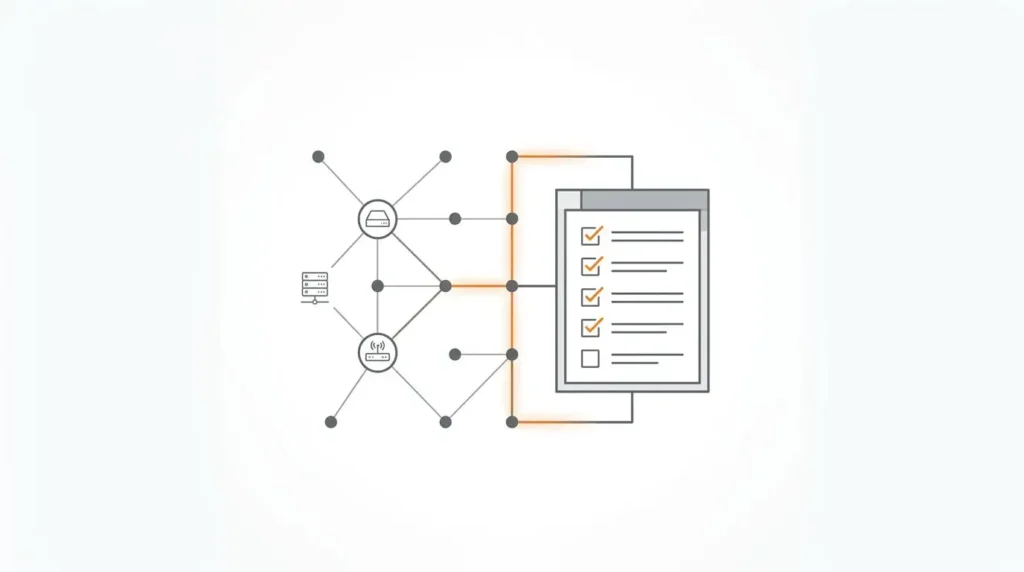
Practical Validation Checklists
Before Go-Live
- Routing and NAT validated against expected flows
- Rollback plan documented and rehearsed
- Monitoring and alerting integrated and tested
During Go-Live
- Critical applications tested end-to-end
- Failover exercised (with realistic traffic if possible)
- Logs reviewed in real time to confirm policy behavior
After Go-Live
- Temporary rules removed or time-limited
- Documentation finalized (as-built diagrams, rule rationale, runbooks)
- Review schedule established (policy, performance, and security profiles)
Conclusion: Firewall Success Is an Ongoing Discipline
Firewall installations fail not because firewalls are ineffective, but because teams treat them as one-time projects instead of continuously managed systems. Routing errors, permissive rules, lack of monitoring, and weak ownership are predictable—and preventable—causes of failure.
Organizations that succeed apply engineering discipline, validate assumptions, and embed firewall operations into broader security and IT processes. When deployed with intent, maintained with rigor, and aligned with business reality, a firewall becomes not a fragile control point, but a reliable foundation for secure connectivity.
© 2025 OutsourceITSecurity. All rights reserved.