How to Align Server Management Automation with Network Security Protocols

How CISO Outstaffing Fits into Your Broader Cybersecurity Strategy
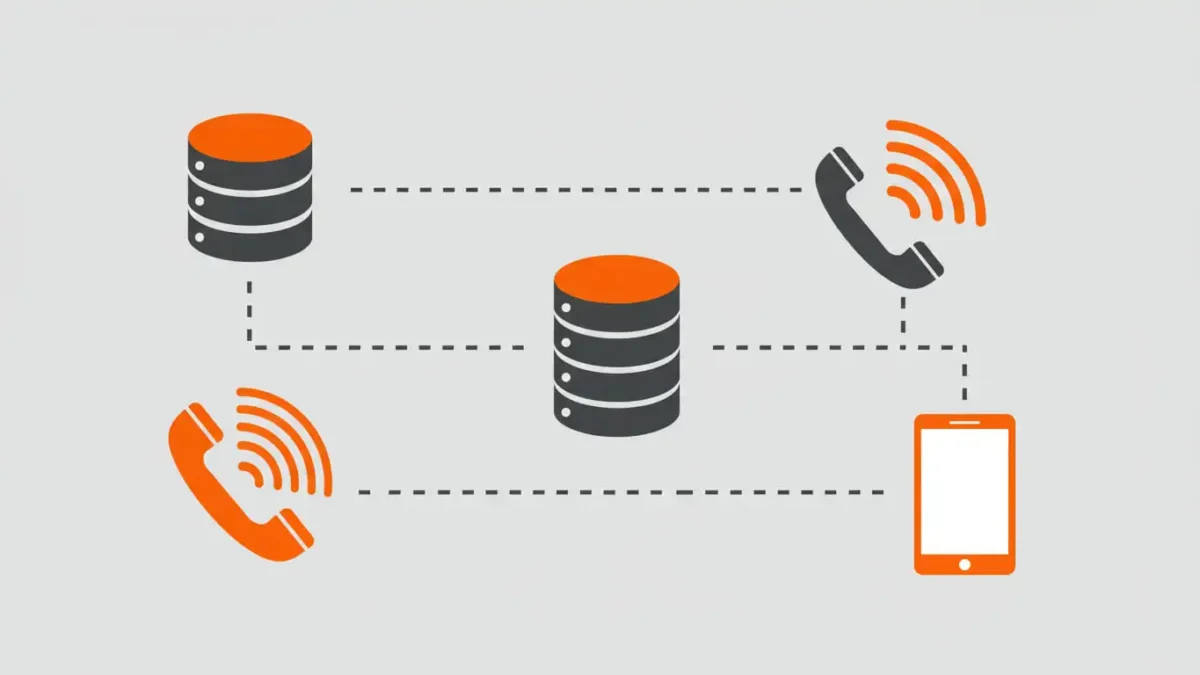
Table of Contents
ToggleWhen and Why to Outsource Your VoIP and Database Administration
Operational Complexity of VoIP and Database Environments
Voice over IP (VoIP) and database systems both introduce complex, stateful workloads with high availability, low latency, and real-time performance requirements. VoIP relies on protocols such as SIP, RTP, and SRTP, and requires integration with firewalls, NAT traversal mechanisms, SBCs (Session Border Controllers), and QoS configuration across network segments. In parallel, enterprise databases require precise control over transaction isolation, indexing, query tuning, replication topologies, and failover clustering.
Both environments must maintain availability under dynamic scaling conditions while also supporting data integrity and endpoint authentication. Misconfiguration in either domain introduces immediate service degradation and security exposure.
Core Administrative Responsibilities and Skill Set Requirements
VoIP administration includes endpoint provisioning, SIP trunk configuration, codec management, VLAN tagging for traffic prioritization, NAT traversal setup, and security hardening through TLS, SRTP, and multi-factor authentication. Administrative coverage must extend to call routing logic, failover call handling, directory integration, and system telemetry.
Database administrators (DBAs) manage schema design, normalization, indexing strategies, stored procedures, and replication schemes. They implement backup schedules, log shipping, disaster recovery plans, and role-based access control. Active monitoring of query performance, deadlock resolution, and transaction log handling are baseline functions for operational continuity.
Advanced VoIP and database environments require cross-disciplinary expertise, which is not always present in generalist IT teams.
Resource Constraints and In-House Team Limitations
Internal IT teams often lack the personnel capacity or specialized training to manage high-volume VoIP systems or complex database infrastructures. In high-growth environments, in-house staff are typically focused on application development or infrastructure scaling, leaving critical support functions under-resourced. Retaining professionals with deep protocol-level knowledge of SIP or advanced query optimization capabilities remains a cost-prohibitive investment for mid-sized organizations.
As both VoIP and database operations require 24/7 coverage and real-time responsiveness, staffing shortfalls lead to latency in incident handling, failure to execute maintenance tasks, and increased mean time to recovery (MTTR).
Indicators for Outsourcing Decision
Operational lag, reactive issue management, and systemic misconfigurations indicate a need for specialized external support. Common indicators include:
- Elevated call failure rates due to SIP registration issues or trunk misrouting
- Increased database I/O latency from unresolved query deadlocks or index fragmentation
- Inconsistent or undocumented configuration changes
- Recurring outages during maintenance windows
- Missed backup windows or verification failures
Escalating these functions to domain-specific administrators with domain knowledge and tooling mitigates performance and availability risks.
Risk Factors in VoIP and Database Operations
VoIP systems are vulnerable to specific attack vectors, including SIP registration hijacking, toll fraud, spoofed INVITE messages, and DDoS attacks targeting signaling or media channels. Session hijacking and protocol fuzzing are frequent attack techniques in exposed VoIP environments.
Databases present surface area for SQL injection, privilege escalation, data leakage through misconfigured permissions, and replication sync errors. Failure to rotate credentials, encrypt data at rest, and control network access increases breach likelihood. Both environments demand granular access control, encrypted communication, and anomaly detection capabilities.
Security and Compliance Considerations
VoIP and database systems store and transmit sensitive metadata and structured records. Security baselines must include TLS/SRTP encryption for VoIP signaling and media, database encryption at rest (e.g., TDE or column-level encryption), and hardened authentication mechanisms.
Regulatory frameworks such as HIPAA, GDPR, and PCI DSS require strict access auditability and change management procedures. Failure to enforce security policies at the VoIP or data layer results in non-compliance, financial penalties, and legal exposure.
Outsourced specialists with subject-matter expertise operate within defined compliance controls, reducing risk and maintaining security baselines in regulated environments.
Cost Efficiency and Scalability Impacts
Outsourcing eliminates fixed labor costs associated with full-time specialists while maintaining access to domain-level expertise. Resource utilization becomes consumption-based, aligning operational costs with real-time business demand. For VoIP, outsourcing enables flexible scaling of trunk capacity, media servers, and SBCs. In database environments, outsourced administration supports horizontal scaling, read replica deployment, and optimized indexing across growing data volumes.
The outsourced database administrator model improves performance predictability through proactive monitoring, automated alerting, and continuous tuning.
Outsourcing Models and Role Segmentation
VoIP and DBA functions can be outsourced via staff augmentation, fully managed service contracts, or hybrid engagement models. Staff augmentation provides dedicated engineers who operate within internal governance structures. Managed services offer complete operational responsibility, including backup execution, incident response, and patch management. Hybrid models combine internal ownership with specialist execution of high-risk or high-complexity tasks.
Clear role segmentation and access policies must be established. VoIP engineers should operate under isolated credentials with audit logging. DBAs should be restricted to change windows and data scopes based on principle-of-least-privilege enforcement.
Organizations often choose to hire VoIP expert externally when internal knowledge gaps intersect with uptime or call quality requirements.
Integration with Internal Systems and DevOps Pipelines
Outsourced roles must integrate with internal CI/CD systems, monitoring platforms, and ticketing workflows. VoIP engineers interface with IPAM/DNS, directory services, and network provisioning tools to enable policy-based voice provisioning. Database administrators require access to schema migration pipelines, application telemetry, and incident response plans.
Automation is key for both roles. VoIP provisioning should include templated configuration scripts and firmware baselines. DBA workflows should support infrastructure-as-code templates for database schema and environment replication.
Logging, metrics collection, and alerting must route through centralized systems with access controls and retention policies aligned with enterprise governance.
Service-Level Governance and Vendor Accountability
Outsourcing arrangements must include formal SLAs with metrics tied to availability, performance, and resolution time. VoIP metrics include call setup time, jitter, packet loss, and MOS score thresholds. DBA metrics include query response time, replication lag, backup success rates, and time-to-restore (TTR) metrics.
Escalation paths, change approval processes, and knowledge transfer documentation must be established before operational engagement. All activities must be traceable through audit logs and linked to assigned change or incident records.
Frequently Asked Questions (FAQ)
Outsourcing VoIP administration addresses internal gaps in protocol-specific expertise, such as SIP configuration, QoS tuning, and security hardening. External specialists manage complex signaling, media routing, and integration tasks that exceed generalist IT team capabilities.
A company should outsource database administration when it lacks in-house DBAs with expertise in query optimization, replication, backup validation, and disaster recovery. Outsourcing becomes critical when performance issues persist, maintenance tasks are delayed, or compliance audits fail.
Common risks include SIP misconfiguration, unmonitored call routing issues, protocol exposure to DDoS or toll fraud attacks, and failure to maintain media quality under variable network conditions. These risks lead to service degradation and security vulnerabilities.
Outsourced DBAs deliver proactive monitoring, performance tuning, and automated remediation workflows. This ensures lower query latency, reduced replication lag, and consistent backup integrity, improving uptime and database responsiveness under load.
Outsourced personnel must operate under role-based access control (RBAC), with separate credentials, time-bound access, and full audit logging. Privileged access should be limited to predefined scopes and enforced through multi-factor authentication.
Yes. VoIP provisioning and database configuration can be codified into infrastructure-as-code templates. External specialists can operate within CI/CD workflows, version control systems, and automated deployment environments while maintaining compliance and auditability.
SLAs define measurable performance baselines such as call setup latency, replication delay, incident response time, and backup success rates. These metrics ensure accountability and serve as a framework for continuous performance monitoring and contract enforcement.