How to Audit Enterprise Infrastructure Before Scaling Security Operations

How to Build a Security Responsibility Matrix Before Outsourcing IT Operations
What to Prepare Before a Firewall Deployment Project Starts
Introduction
A firewall project often starts with the wrong assumption. Many teams think the hard part begins when engineers touch the device, create rules, and move traffic through a new control point. In reality, the hardest part usually appears much earlier. It begins when the business tries to understand what must be protected, which services cannot break, who owns the decisions, and how much disruption the environment can tolerate during rollout.
That is why preparation matters more than most companies expect. A firewall can block, inspect, segment, and enforce policy, but it cannot fix missing documentation, unknown dependencies, chaotic network paths, or a team that still debates ownership after the maintenance window starts. If those issues remain unresolved, deployment becomes slower, riskier, and much more expensive than it should be.
Define the scope before anyone touches policy
The first preparation step is not technical. It is strategic. The business needs to define what the firewall project is supposed to achieve. Some organizations want stronger perimeter control. Others want segmentation between internal zones, tighter management of remote access, better visibility into traffic, or safer publication of public-facing services.
Without that clarity, projects drift into generic configurations that look busy but fail to solve the real problem. A strong scoping phase should answer several practical questions:
- Which business systems must be protected first
- Which sites, environments, or segments are included in the first phase
- Which legacy services still need exceptions
- Which traffic flows are business-critical and cannot tolerate interruption
- Which stakeholders approve policy changes and cutover timing
This step sounds simple, but it prevents a classic failure pattern. Teams often rush into configuration work only to discover halfway through the project that different departments expected different outcomes. One wanted visibility, another wanted segmentation, and a third wanted the same open access as before but with a shinier interface. That is not a firewall strategy. That is a committee in mild distress.
Map traffic flows and service dependencies in advance
Unknown traffic is where deployment pain begins
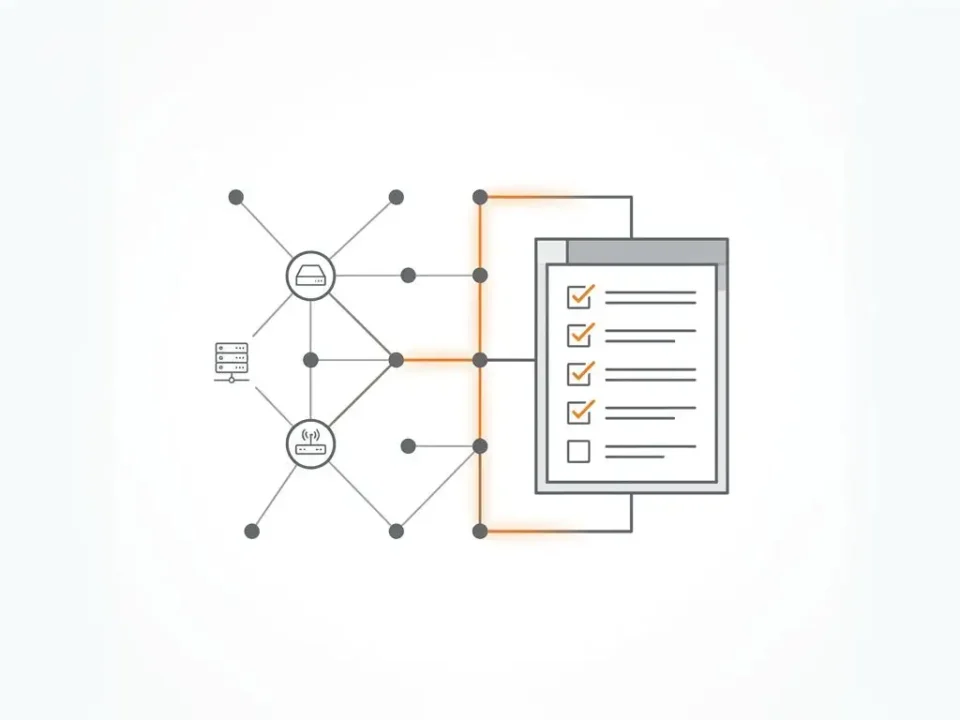
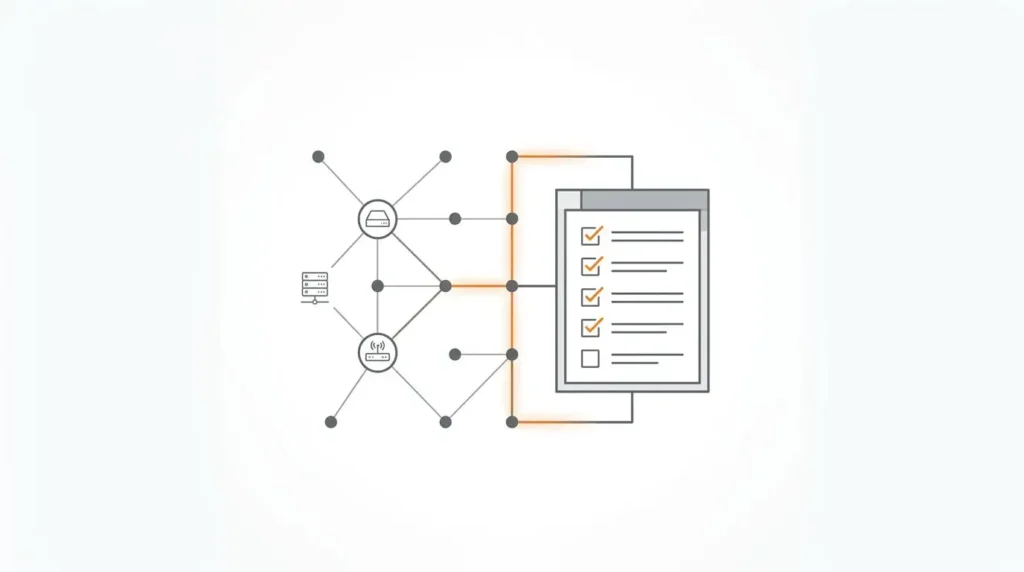
Before policy design starts, the team should identify how traffic actually moves through the environment. Not how it was supposed to move three years ago. Not how the old diagram claims it moves. The real flows. That means inbound connections, outbound access, east-west communication, administrative sessions, update services, identity dependencies, backup traffic, partner connectivity, and any application-specific communication that supports production systems.
This traffic map should include:
- Source and destination zones
- Applications and protocols in use
- Ports and services that remain necessary
- Business owners for critical flows
- Dependencies between user access, servers, and external platforms
Dependencies deserve more attention than they usually get
A service may look simple from the user side while depending on authentication systems, external APIs, monitoring agents, DNS resolution, time synchronization, patch repositories, and management paths in the background. If those supporting flows are missed during preparation, deployment teams often end up troubleshooting broken services that no one remembered to document. That is why traffic discovery is not clerical work. It is risk reduction.
Review network architecture before the deployment window
A new firewall should fit the environment instead of fighting it. That means the project team needs a current view of the network architecture before rollout. The review should cover network segments, uplinks, routing paths, address plans, VPN dependencies, public-facing systems, cloud interconnects, and internal trust boundaries.
Architecture questions worth answering early
- Where will the new firewall sit in the traffic path
- Which zones need strict separation and which need controlled communication
- How will routing behave during and after cutover
- Which services need high availability or redundant paths
- Which legacy flat networks create unnecessary exposure
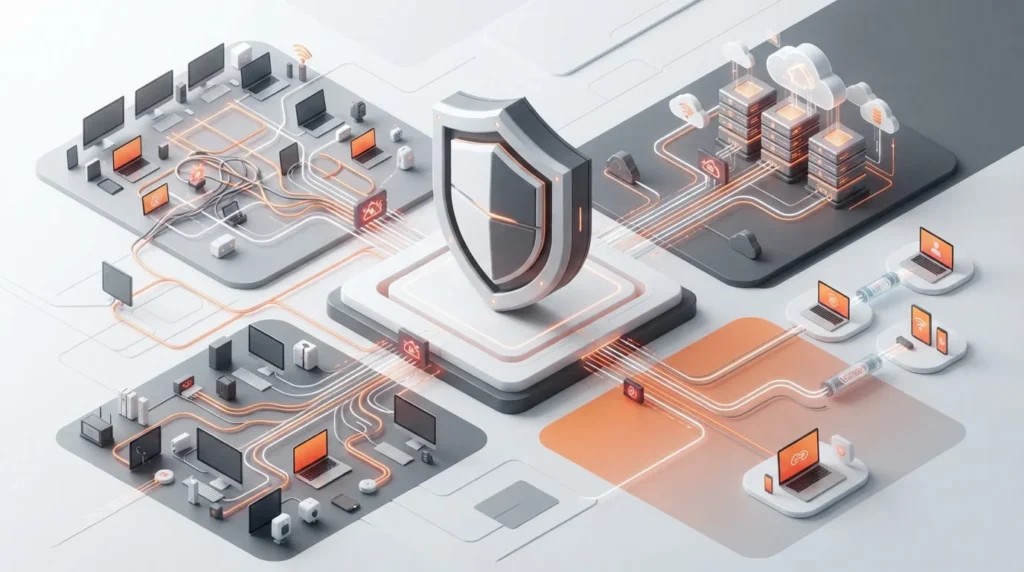
This is also the stage where the team should think seriously about segmentation. Good segmentation reduces lateral movement opportunities and keeps a compromise in one part of the environment from becoming a company-wide event. A firewall project without segmentation planning often delivers only partial value, because the device ends up protecting a broad and poorly divided network instead of enforcing meaningful boundaries.
If the project includes both architecture planning and implementation, it makes sense to align the technical model with the broader design of firewall process before deployment tasks begin.
Prepare the rule model and change principles before deployment
Firewall rules should not be written as a last-minute reaction to application owners sending messages during the maintenance window. The team should prepare a rule model in advance based on approved traffic needs, business criticality, and least-privilege thinking.
What should be prepared before rule creation
- Zone definitions and naming logic
- Object groups for hosts, subnets, and services
- Approval criteria for new access requests
- Temporary rule handling and expiration dates
- Documentation standards for every exception
This stage matters because technical debt often begins at the policy level. When rules are added without structure, they multiply quickly, become harder to review, and turn future troubleshooting into detective work. A disciplined rule model saves time during deployment and keeps the environment manageable after go-live.
Least privilege needs business translation
Least privilege is a good principle, but teams still need to translate it into operational language. Which traffic is truly necessary. Which paths should remain blocked by default. Which administrative access should be limited to specific hosts or time windows. Which services can move through proxies, gateways, or segmented paths instead of broad direct access. That translation work belongs in preparation, not in the middle of an outage call.
Prepare operations, logging, and ownership before launch
A firewall is not just a deployment object. It becomes part of daily operations. That means the organization should define how it will monitor, review, and maintain the environment after the rollout. Teams often focus on cutover and forget the unglamorous but essential questions that appear the next morning.
Operational readiness should include
- Who monitors logs and alerts
- How policy changes are requested and approved
- How logs are retained and correlated with other systems
- Who reviews failed connections and suspicious patterns
- How backups of the configuration are stored and tested
Logging deserves special attention. If the firewall becomes a major control point but its events remain poorly collected or inconsistently reviewed, the organization loses much of the visibility that justified the project in the first place. The firewall should support investigations, change review, and operational troubleshooting, not simply pass traffic in a more expensive way.
Organizations preparing a broader rollout can also evaluate whether a specialized firewall installation service will help reduce cutover risk and accelerate post-deployment stabilization.
Build a testing and rollback plan before the first change goes live
Every firewall project should include a defined validation plan and a rollback plan. This is not pessimism. It is competence. Even a well-prepared rollout can expose hidden dependencies, incomplete documentation, routing surprises, or application behavior that looked fine in theory and less fine under real traffic.
Testing should verify
- Critical business applications after policy activation
- Administrative access paths for support teams
- Remote connectivity and VPN behavior
- DNS, authentication, update, and backup traffic
- Logging, alerting, and configuration persistence
Rollback should answer three things
- Who can authorize reversal if critical services fail
- How the previous state can be restored quickly
- What conditions trigger rollback instead of more troubleshooting
Teams that skip this stage tend to improvise under pressure. That never improves decision quality. It only increases adrenaline and meeting attendance.
Where expert support adds value before deployment
Many internal teams understand their networks well but still struggle to prepare a firewall project thoroughly. They know the environment, yet they do not always have the time, documentation discipline, or cross-functional visibility needed for a clean deployment.
External specialists can help validate architecture, review traffic maps, structure rule models, test readiness, and identify operational risks before the first change reaches production. That support is particularly useful when the environment includes multiple sites, mixed cloud and on-prem paths, inherited legacy systems, or business-critical applications with fragile dependencies.
The value of expert preparation is not only technical accuracy. It is sequence. Good specialists help teams do the right work in the right order, which is exactly what keeps firewall projects from turning into live-fire archaeology.
What strong preparation gives the business
- Fewer surprises during deployment windows
- Clearer rule logic and cleaner long-term policy management
- Better protection of critical systems and network segments
- Higher confidence in cutover, rollback, and post-launch support
- Reduced downtime caused by undocumented dependencies
- More useful logging and stronger operational ownership
Preparation does not slow a firewall project down. It removes the kinds of mistakes that slow it down later. That difference matters. A rushed deployment may look fast on the calendar, but it often repays the team with weeks of cleanup, exception handling, and tense conversations about why nobody mentioned that one important legacy service.
Firewall deployment readiness matrix
| Preparation area | What should be ready before deployment | Why it matters |
|---|---|---|
| Project scope | Protection goals, in-scope environments, stakeholders, business priorities | Prevents conflicting expectations and weak rollout decisions |
| Traffic mapping | Application flows, administrative paths, dependencies, external connections | Reduces service disruption and uncovers hidden requirements |
| Architecture review | Zones, routing, segmentation, high availability, trust boundaries | Ensures the firewall fits the network instead of disrupting it |
| Policy preparation | Rule model, naming, object groups, approval logic, exception handling | Improves control quality and keeps future rule growth manageable |
| Operational readiness | Logging, ownership, backups, monitoring, change workflow, rollback plan | Supports stable operation after the cutover is complete |
FAQ
What is the first thing to prepare before a firewall deployment project starts
The first step is to define the business objective of the project. The team needs to know whether the priority is segmentation, perimeter control, visibility, remote access protection, or a combination of these goals.
Why is traffic mapping so important before deployment
Because undocumented traffic causes many of the failures that appear during cutover. If teams do not know which services communicate and how they depend on supporting systems, they are likely to block something important.
Should rule creation begin only after architecture review
Yes. Rules should reflect the real network design, trust boundaries, and approved traffic needs. Writing policy too early usually creates rework and weak exceptions.
When does a company need external help for firewall preparation
External support is useful when the environment is complex, documentation is incomplete, internal teams are overloaded, or the deployment affects critical systems that cannot tolerate trial-and-error changes.
Sources
- NIST SP 800-41 Rev. 1 Guidelines on Firewalls and Firewall Policy
- NIST SP 800-92 Guide to Computer Security Log Management
- CISA Cybersecurity Performance Goals
- CISA guidance on network segmentation and visibility
© 2026 OutsourceITSecurity. All rights reserved.