
Avoiding Data Loss and Downtime: The Critical Role of a Database Administrator

Penetration Testing: How Simulated Hacker Attacks Help Protect Businesses
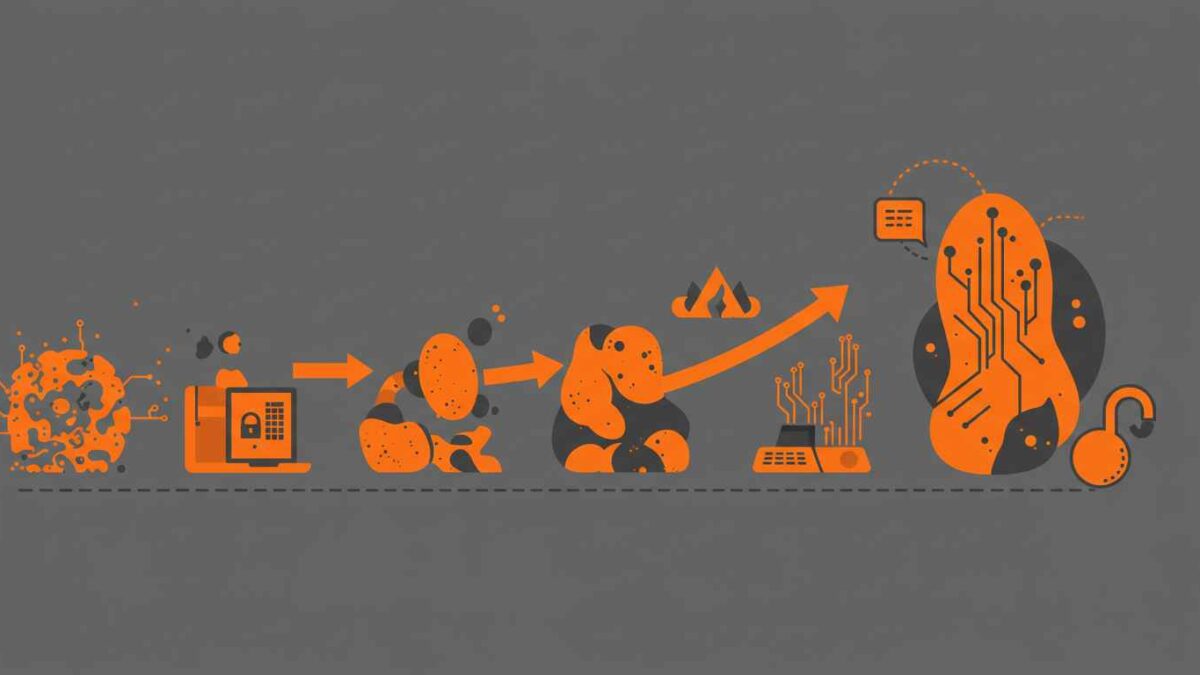
The Evolution of Cyber Threats: How Attack Methods and Defense Strategies Have Changed
Introduction
Cybersecurity is an ever-evolving battlefield, where attackers continuously refine their techniques while defenders race to outmaneuver them. What began as amateur experimentation has escalated into highly sophisticated cyber warfare, with businesses, governments, and individuals caught in the crossfire. In this article, we will trace the progression of cyber threats, examine key defense mechanisms, and explore emerging security innovations designed to combat the dangers of tomorrow. As organizations increasingly turn to Outsource IT Security solutions, maintaining robust digital protection has become more critical than ever.
The Changing Face of Cyber Threats
The tactics of cyber attackers have grown in complexity, mirroring advancements in technology. From isolated disruptions to global-scale cyber warfare, the motivations driving digital crime have diversified.
From Pranks to Profit-Driven Malware
In the early years of computing, hacking was often an intellectual challenge rather than a destructive force. The Morris Worm (1988) inadvertently caused havoc, exposing vulnerabilities in interconnected networks. Fast-forward to the 2000s, and cyber threats shifted towards profit-driven malware, with trojans and ransomware targeting businesses and consumers alike. The rise of criminal syndicates specializing in cyber extortion marked a turning point, with attackers leveraging encryption to hold data hostage.
Cyber Espionage and State-Sponsored Attacks
Cybercrime soon transcended financial gain, becoming a weapon of political and military influence. Advanced Persistent Threats (APTs) emerged, employing sophisticated infiltration methods to exfiltrate sensitive government and corporate data. The Stuxnet worm (2010) was a game-changer, demonstrating how cyber weapons could cripple industrial infrastructure. Today, cyber espionage remains a major concern, with nation-states deploying stealth malware, zero-day exploits, and deepfake-enhanced disinformation campaigns to manipulate geopolitical landscapes.
The Evolution of Defensive Strategies
As cybercriminals refined their tactics, cybersecurity professionals had to rethink traditional defense models. Reactive solutions became obsolete, giving rise to proactive, adaptive security frameworks.
Zero-Trust Architecture: Eliminating Assumptions
One of the most significant advancements in cybersecurity has been the Zero-Trust model, which assumes that no entity—internal or external—should be automatically trusted. This paradigm enforces continuous verification of credentials, segmented network access, and encrypted data storage, drastically reducing attack surfaces.
AI-Enhanced Threat Detection
Cybersecurity teams now deploy AI-powered algorithms to analyze network behavior in real-time. Unlike conventional signature-based defenses, AI-driven security can detect deviations from normal activity, flagging anomalies before an attack unfolds. This approach enables organizations to proactively neutralize threats rather than react to breaches after the damage is done.
Decentralized Security and Blockchain Authentication
To counter large-scale data breaches, cybersecurity experts are turning to blockchain-based authentication and decentralized security models. Distributed ledgers offer tamper-proof verification mechanisms, ensuring that sensitive credentials remain protected against unauthorized access or manipulation.
The Future of Cybersecurity: AI vs. AI
The next frontier of cyber threats is AI-generated attacks, capable of adapting, learning, and executing operations without human intervention. Malicious AI can bypass traditional defenses, exploit vulnerabilities autonomously, and launch deepfake phishing scams indistinguishable from legitimate interactions. To combat this, cybersecurity professionals are deploying self-evolving machine-learning models that anticipate attacks before they occur. Organizations investing in Information and Data Security solutions are incorporating AI-powered defenses to stay ahead of emerging threats.
Conclusion
The arms race between cyber attackers and security defenders shows no signs of slowing down. By adopting adaptive security models, AI-enhanced detection, and decentralized authentication, organizations can stay ahead of the escalating threats in an increasingly digital world. The future of cybersecurity will not be won by static defenses but by innovative, predictive security technologies designed to outmaneuver the adversaries of tomorrow.