Top Traits of Expert Firewall Design: Security Meets Usability
Scaling Securely in the Cloud: Enterprise Infrastructure & DevOps Outsourcing
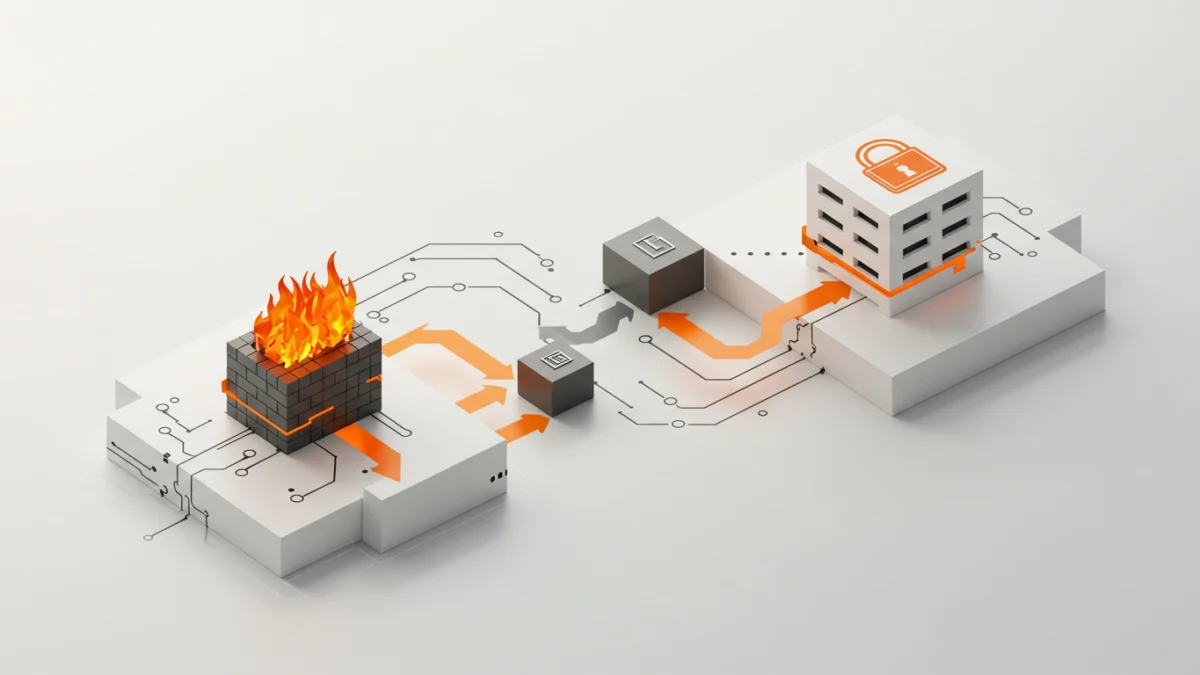
Table of Contents
ToggleStrengthening Defenses: Firewall Security Management + Managed SIEM Services
Role of Firewalls and SIEM in Enterprise Security Architecture
Firewalls and Security Information and Event Management (SIEM) systems serve complementary functions within layered defense models. Firewalls enforce perimeter and internal segmentation policies based on source/destination, protocol, port, and context-aware attributes. SIEM systems ingest telemetry from multiple sources, apply normalization and correlation, and generate alerts based on behavioral anomalies, signature matches, or rule-defined conditions. Together, they provide control and visibility across threat surfaces. Firewall telemetry enhances SIEM fidelity, while SIEM analysis improves firewall tuning.
Core Functions of Firewall Security Management
Firewall security management involves maintaining policy accuracy, device stability, rule efficiency, and log integrity. Key operational tasks include:
| Function | Description | Frequency | Output |
|---|---|---|---|
| Rule Review | Identify redundant or shadow rules | Quarterly | Optimized rulebase |
| Policy Enforcement | Apply new or updated access controls | As needed | Live policy on target devices |
| Log Configuration | Set rule-level logging behavior | During rule change | Syslog to SIEM or storage |
| Device Health Monitoring | Track CPU, memory, session table usage | Real-time | SNMP/Telemetry to NOC |
Rule hygiene ensures optimal performance, reduces attack surface, and prevents rule sprawl. Management processes include role-based access control, versioning, and audit trail enforcement.
Managed SIEM Services: Capabilities and Operational Benefits
Managed SIEM services provide scalable telemetry processing, correlation, and threat detection across distributed environments. Core components include ingestion pipelines, parsing logic, normalization schemas, correlation engines, and alerting systems.
| Stage | Function | Tools Involved |
|---|---|---|
| Ingestion | Collect logs from firewalls, servers | Syslog, API, Agent |
| Parsing | Normalize data into unified schema | Logstash, Fluentd |
| Correlation | Detect patterns across event sources | SIEM Rules, ML Models |
| Alerting | Notify based on rules or thresholds | Email, SOAR, Ticketing |
| Archival | Store logs for compliance retention | Object Storage, WORM Media |
Operational benefits include centralized visibility, threat prioritization, compliance enforcement, and reduced mean time to detect (MTTD). Scalability is achieved via horizontally distributed collectors and cloud-native processing pipelines.
Integration of Firewall Logs with SIEM Systems
Firewall telemetry integration supports enriched event analysis and contextual alerting. Logs include rule matches, session terminations, NAT translations, and protocol anomalies. Proper integration requires:
Consistent syslog formats (e.g., CEF, LEEF, JSON)
Timestamp synchronization using NTP
Normalized field sets for source IP, destination IP, port, protocol, action
Tagging of high-value rules for priority monitoring
Field mapping ensures compatibility with correlation rules and compliance dashboards. Event deduplication and noise filtering reduce storage and processing overhead.
Use Cases for Joint Firewall and SIEM Operations
Combined deployment enables multiple high-impact use cases:
Lateral Movement Detection: Correlating east-west firewall logs with endpoint telemetry identifies suspicious internal traversal.
Geo-Based Blocking Analysis: Firewall-denied access attempts from restricted countries trigger high-confidence alerts.
Anomaly Correlation: Abnormal volume of denied connections across zones maps to port scanning or brute-force activity.
Threat Containment: SIEM-generated alerts feed into SOAR platforms, which trigger firewall rule adjustments via API.
Policy enforcement and event analytics work in tandem to detect and contain threat actors before privilege escalation or data exfiltration.
Compliance-Driven Monitoring and Reporting
SIEM and firewall systems support regulatory mandates by delivering auditable controls and evidentiary documentation.
| Framework | Log Retention | Firewall Requirements | SIEM Functionality |
|---|---|---|---|
| PCI DSS | 1 year | Cardholder environment segmentation | Alert logging, access control logs |
| ISO 27001 | Risk-based | Network segregation, policy-based access | Control effectiveness evidence |
| HIPAA | 6 years | ePHI traffic control, access monitoring | Access traceability, incident logs |
| NIST 800-53 | Defined per control | Boundary defense, anomaly response | Centralized logging, audit support |
Correlation rules enforce log integrity, detect tampering, and ensure end-to-end traceability. Reports are exported in PDF, JSON, or XLS formats with digital signatures where required.
Performance Metrics and SLA Targets
Key performance indicators include:
Time to Detect (TTD): Interval between event occurrence and alert generation
Time to Respond (TTR): Time from alert to containment or mitigation
Log Retention SLA: Guaranteed storage duration and retrieval availability
Firewall CPU and Session Metrics: Resource thresholds triggering alerts
Alert fidelity is measured by signal-to-noise ratio, false positive rate, and event-to-incident conversion metrics. Managed SIEM services optimize rule tuning based on these indicators.
Scaling Firewall and SIEM Infrastructure Together
Enterprise growth requires coordinated scaling strategies:
Log Volume Forecasting: Calculate ingestion requirements based on device count and verbosity
Correlation Load Distribution: Allocate rules across processing nodes to avoid bottlenecks
Policy Synchronization: Ensure rule changes are reflected in SIEM parsing and classification
Elastic Storage Management: Use tiered storage for hot, warm, and cold log access
Automated provisioning via infrastructure-as-code frameworks enables consistent deployments across hybrid and multi-cloud architectures.
Operational Handoffs Between Internal Teams and Providers
Clear delineation of responsibilities improves service continuity. Role definitions include:
| Function | Internal Team Responsibility | Provider Responsibility |
|---|---|---|
| Rulebase Management | Drafting and submitting changes | Validation, deployment, rollback |
| Log Source Configuration | Firewall-side configuration | SIEM ingestion setup and schema alignment |
| Incident Response | Business impact assessment | Alert triage, forensic data delivery |
| Reporting | Review and sign-off | Template generation and compliance mapping |
Change control is enforced through ITSM platforms with predefined escalation paths. Mutual visibility into ticket status and system health enhances coordination.
Combined Value in IT Security Outsourcing Strategy
Unified deployment of firewall security management and managed SIEM services enhances enterprise security posture. Firewall logs serve as high-fidelity telemetry, while SIEM provides cross-domain analytics. Outsourcing enables access to domain expertise, 24/7 monitoring, and infrastructure scale not feasible internally. Integration with incident response and compliance teams ensures end-to-end control, visibility, and accountability.
FAQ
Rule match actions, denies, NAT translations, and authentication failures provide actionable insights for correlation and threat detection.
Best practice recommends quarterly reviews, with immediate updates following incidents, architectural changes, or audit findings.
Logs must be retained for at least one year, with three months of logs available for immediate analysis.
Yes. SIEM alerts integrated with SOAR systems can initiate API-driven firewall rule adjustments based on preapproved playbooks.
Alerts are prioritized using asset value, threat severity, rule criticality, and correlation context from multiple telemetry sources.