
Building a Unified Shield: Centralized Firewall Management Best Practices

Searching for the Perfect Firewall Migration Tool? Here’s What Matters
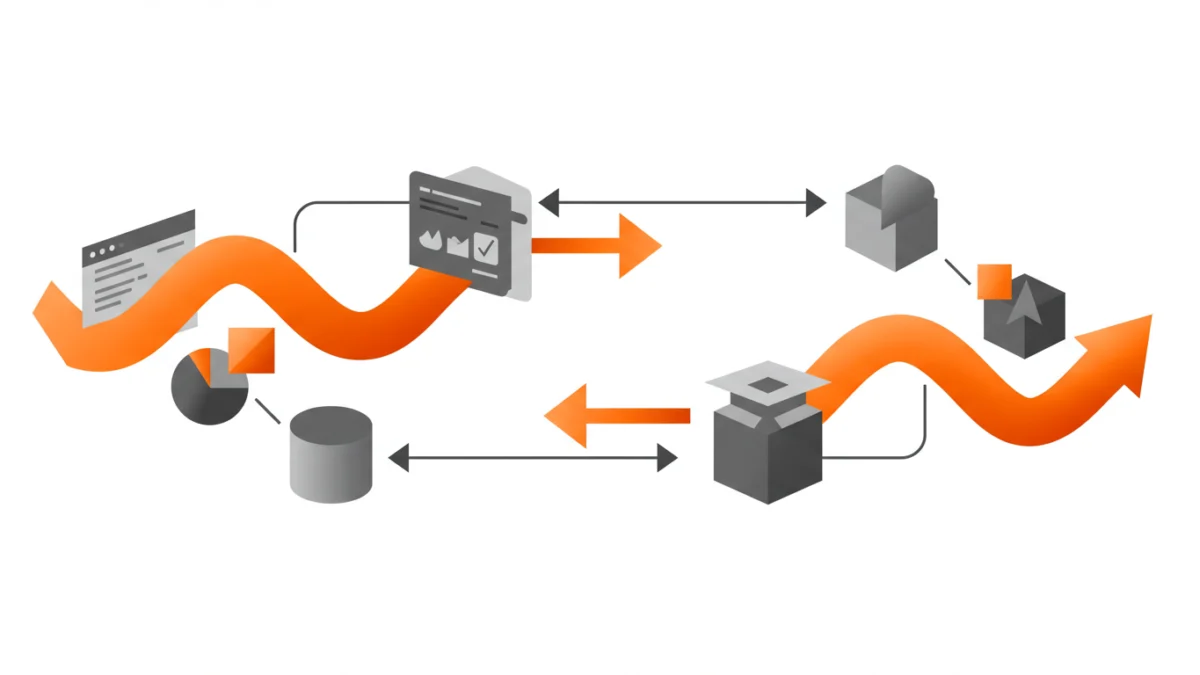
Table of Contents
ToggleSeamless Palo Alto Migration: The Ultimate Tool‑Driven Transition
Migration Requirements in Enterprise Firewall Environments
Firewall migrations occur when organizations consolidate security infrastructure, upgrade legacy hardware, or enforce architectural standardization. Common drivers include end-of-life devices, vendor alignment across sites, compliance mandates, and performance limitations. Requirements include preservation of rule intent, minimal service interruption, traffic inspection parity, and compatibility with existing network topology. Organizations must maintain stateful session integrity, enforce consistent security postures, and support zero-trust models during and after migration.
Architectural Considerations Before Migration
Migration planning begins with a comprehensive audit of the current environment. Teams must document existing firewall models, software versions, interfaces, security zones, NAT rules, and policy sets. Dependencies on identity services, VPN configurations, high availability clusters, and third-party integrations must be mapped. Configuration drift, inconsistent naming, unused objects, and rule sprawl require normalization. Network segmentation schemas—both logical and physical—must align with the target Palo Alto Networks firewall architecture. Virtualization layers (e.g., VMware NSX, Hyper-V) and public cloud presence (AWS, Azure, GCP) further complicate migration scope.
Features and Capabilities of a Palo Alto Migration Tool
A specialized Palo Alto migration tool enables structured translation of rule sets, policies, and objects from legacy vendors (e.g., Cisco ASA, Check Point, Fortinet) into Palo Alto syntax. Key features include:
Rule conversion logic that maps services, zones, addresses, and applications
Object deduplication and conflict resolution
Identification of disabled, shadowed, or unused policies
Optimization engines for collapsing redundant entries
Syntax validation for Palo Alto configuration structure
Support for device groups, templates, and Panorama import
Tools must support batch processing, audit logging, and export options for manual verification. Output configurations must align with deployment targets: physical appliances, virtual firewalls (VM-Series), or Panorama-managed centralized environments.
Pre-Migration Preparation and Validation
Source firewall configurations require cleansing before ingestion into the migration tool. This step includes:
Removal of expired rules, unreachable objects, and legacy references
Standardization of object names, zone labels, and service definitions
Verification of route statements and interface bindings
Ensuring rule uniqueness and completeness
Preparation includes exporting configuration files from the source platform, conducting checksum validation, and archiving baseline states for rollback. ACLs, inspection profiles, dynamic routing settings, and NAT behaviors must be evaluated against Palo Alto equivalents to avoid functional gaps.
Migration Workflow Using Automated Tools
The migration workflow includes:
Parsing – Source configuration files are ingested and broken into atomic policy elements.
Mapping – Address and service objects, zones, NAT policies, and user roles are mapped to Palo Alto schema.
Translation – Policies are restructured using Palo Alto syntax, including explicit rule ordering and application awareness.
Optimization – Rule deduplication, object cleanup, and service grouping reduce rulebase size and processing overhead.
Output – The converted configuration is exported in XML or set commands for direct import.
All outputs undergo validation against policy intent to detect anomalies, such as overly permissive rules, shadowed entries, or inverted logic.
Policy Optimization During Transition
Firewall migration presents an opportunity to reduce rulebase complexity. Optimization includes:
Consolidating rules that share source/destination pairs and actions
Removing rules referencing unused services or decommissioned hosts
Applying nested address groups to simplify long access lists
Aligning policy naming conventions with enterprise standards
Converting implicit rules into explicit policies to improve auditability
Tools may score rules based on usage metrics or visibility into logs, enabling risk-aware pruning. Policies are re-ordered to prioritize deny conditions and minimize evaluation latency. Default policies are revised to avoid overbroad access.
Integration with Firewall Installation Services
After migration tool output is finalized, configuration is delivered to the firewall platform during deployment. Enterprises leverage firewall installation services for:
Appliance racking, cabling, and physical network integration
Initial bootstrapping and software image loading
Interface configuration, zone assignments, and routing updates
Importing the generated policy set and object database
High availability setup with synchronization testing
DNS, NTP, SNMP, and logging configuration
Installers validate control and data plane connectivity, verify traffic shaping rules, and conduct pre-deployment acceptance testing. Device health checks confirm hardware readiness for policy enforcement.
Testing and Verification Procedures
Validation includes functional testing of all rule paths, NAT translations, and user authentication flows. Traffic is generated using test clients or simulation tools to confirm expected rule behavior. Admin teams review:
Log outputs for rule hit confirmation
Shadow rule alerts indicating unreachable policies
Inspection profiles ensuring SSL decryption and threat signature matching
Dynamic address group resolution using external feeds
Verification ensures logging, alerting, and security profiles match operational expectations. Interface and zone counters are checked for throughput anomalies and packet drops. Unused rules are flagged for future removal.
Cutover Strategy and Rollback Planning
Migration cutover may follow one of two models:
Phased Cutover: Segments of the network are transitioned incrementally. Teams monitor localized effects and adjust policies before broader rollout.
Full Cutover: Entire policy set is deployed across the enterprise in a controlled maintenance window.
Rollback procedures must be clearly defined, including:
Reverting DNS and routing configurations
Re-enabling legacy devices on standby ports
Restoring archived configuration files to original appliances
Re-validating original rulebase behavior
Fallback scenarios require pre-tested scripts and dual-path network designs to minimize downtime.
Post-Migration Review and Maintenance
Post-deployment activities include:
Reviewing rule usage metrics over 30/60/90-day periods
Identifying candidates for rule removal or adjustment
Monitoring system performance and CPU utilization
Updating documentation with new policy structures, objects, and change logs
Conducting internal compliance checks and external audits
Policy aging and rule effectiveness reports inform future optimizations. Lifecycle governance schedules regular reviews and change tracking. Integration with security orchestration platforms enhances responsiveness to dynamic threat environments.