
From IT Consulting to Secure Infrastructure: Building a Cyber-Resilient Business

International IT Consulting for Global Infrastructure Projects
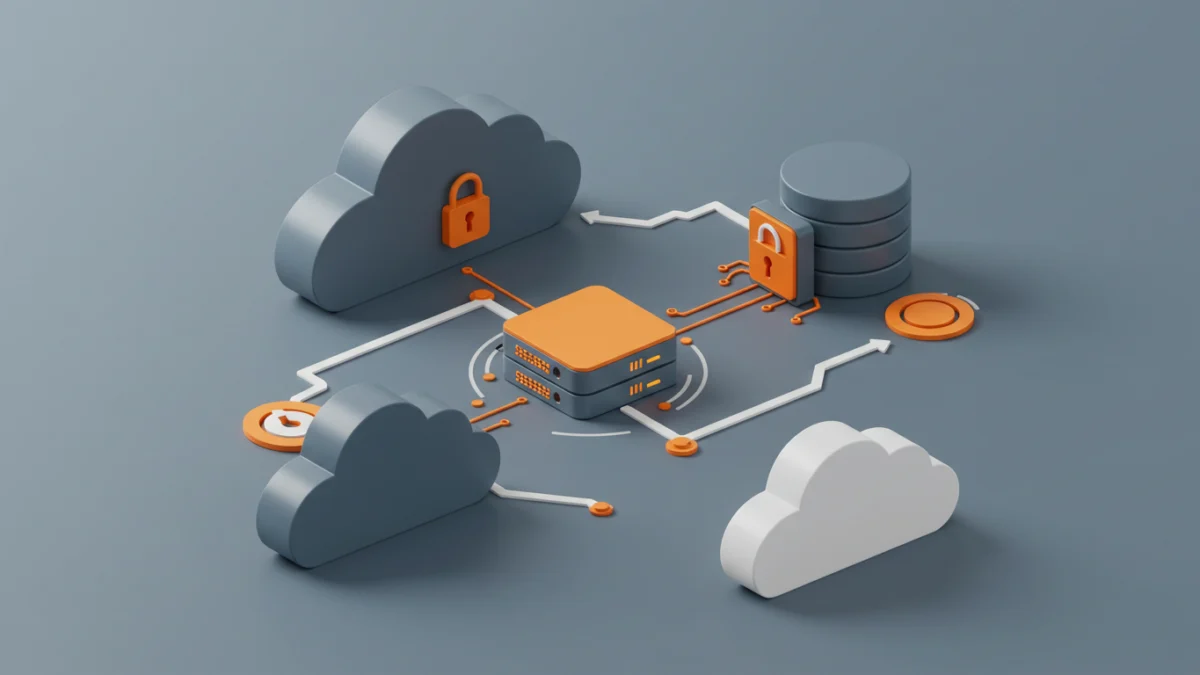
Outsourcing Information Security in Cloud Environments
The shift to cloud-first infrastructure has enabled organizations to scale quickly, reduce capital expenditures, and support flexible working environments. But as infrastructure disperses across public, private, and hybrid clouds, so do security risks. Misconfigured cloud services, identity sprawl, and lack of centralized monitoring make cloud environments particularly vulnerable to breaches, especially when organizations lack the expertise or capacity to manage their expanding threat surface.
This evolution calls for a new approach — one where agility in deployment is matched with agility in defense. For many organizations, the solution lies in leveraging external expertise. Outsourcing information security in cloud environments has emerged as not only a tactical response to resource constraints, but a strategic move toward resilience, compliance, and performance at scale.
The Cloud Security Challenge
Cloud infrastructure changes the game for cybersecurity. In traditional data center environments, organizations had full control over physical servers, firewalls, and network architecture. In the cloud, much of that responsibility shifts. While providers like AWS, Microsoft Azure, and Google Cloud secure the underlying infrastructure, customers remain accountable for securing applications, data, identities, and access controls — a concept widely referred to as the “shared responsibility model.”
Despite robust cloud-native tooling, most data breaches in the cloud occur not because providers fail, but because customers misconfigure services or overlook basic security controls. According to the 2023 Cloud Security Report by Check Point and Cybersecurity Insiders, nearly 75% of organizations experienced a cloud security incident in the past year, with misconfiguration being the leading cause.
Add to this the challenge of hybrid deployments, containerization, and growing third-party integrations, and it becomes evident that managing cloud security effectively demands specialized tools, constant vigilance, and well-trained staff — all of which are in short supply for many in-house IT teams.
Why Outsourcing Security in the Cloud Makes Sense
Faced with these challenges, more organizations are turning to external partners to help manage cloud security. The practice of outsourcing information security brings multiple benefits: access to experienced professionals, 24/7 threat detection, advanced analytics, and faster incident response — without the need to build or maintain an internal security operations center (SOC).
Outsourcing is particularly attractive for:
- Fast-growing companies that lack the bandwidth to manage multi-cloud deployments securely
- Enterprises with regulatory obligations that demand continuous monitoring, auditing, and incident readiness
- Organizations operating across time zones, requiring around-the-clock security visibility and response
By offloading routine security tasks such as log correlation, vulnerability scanning, and alert triage to third-party specialists, internal teams can focus on business-aligned security strategy and governance. Moreover, outsourced providers often bring industry best practices, updated threat intelligence, and scalable technologies that are difficult to maintain internally.
What to Outsource — and What to Keep In-House
Not all security functions should be outsourced. Core responsibilities like data classification, risk acceptance, and security leadership (CISO-level decisions) are best retained internally. However, many technical and operational activities are ideally suited for third-party execution:
Commonly Outsourced Cloud Security Services:
- Threat detection and response
- Cloud workload protection (CSPM/CWPP tools)
- Log management and SIEM operation
- Vulnerability management
- Compliance monitoring and reporting
- Security testing (penetration tests, red teaming)
What matters is having a clearly defined scope, service level agreements (SLAs), and escalation protocols. This ensures that outsourced services augment, rather than obscure, the organization's internal security posture.
Real-Time Monitoring: A Must-Have for Cloud Environments
Visibility is the bedrock of any security strategy — and in the cloud, it’s notoriously difficult to achieve without the right tools. Native logging from services like AWS CloudTrail, Azure Monitor, and Google Cloud Operations Suite provide granular event data, but they require integration, normalization, and correlation to become actionable.
That’s where cloud security monitoring solutions come into play. These platforms aggregate telemetry from multiple sources — cloud APIs, SaaS logs, identity providers, and network traffic — to provide a unified view of security events across the environment. They enable:
- Real-time anomaly detection (e.g., data exfiltration, login abuse, lateral movement)
- Alert prioritization based on behavioral baselines and known attack patterns
- Automated workflows for response, isolation, and remediation
- Compliance dashboards for frameworks like ISO 27001, PCI DSS, and HIPAA
By outsourcing monitoring to providers equipped with these solutions, businesses gain 24/7 threat detection without investing in their own SOC infrastructure.
Choosing the Right Partner
Not all security vendors are created equal. Organizations should vet outsourcing providers thoroughly, considering:
- Certifications (e.g., ISO/IEC 27001, SOC 2 Type II)
- Compliance alignment with your industry’s regulatory environment
- Technology stack compatibility, especially with your cloud providers
- Responsiveness and support structure, including SLA guarantees
- Transparency in threat detection methods, reporting, and data handling
A trustworthy partner will operate with openness, provide documentation of controls, and actively involve internal stakeholders in security planning and incident handling.
Managing Compliance in an Outsourced Model
One of the misconceptions about outsourcing security is that it shifts legal responsibility. In reality, even when services are outsourced, compliance obligations remain with the organization. This is why contractual clarity is essential.
Key elements to include in service agreements:
- Data protection clauses (including data residency, access controls, and retention)
- Defined roles and responsibilities (based on RACI or similar models)
- Audit and reporting provisions
- Joint incident response protocols
- Subcontractor disclosures and controls
These measures ensure that while monitoring and execution may be handled externally, governance and accountability remain tightly managed.
Conclusion
As cloud infrastructure becomes the norm, securing it must be an organizational priority. Relying solely on in-house teams to manage the growing complexity of distributed systems and regulatory compliance is no longer sustainable for many businesses.
By outsourcing information security to specialized providers and leveraging modern cloud security monitoring solutions, organizations can ensure that their cloud environments are not only secure, but also resilient and scalable. The result is a stronger, more focused internal security posture — supported by external expertise and advanced tools — that protects what matters most in an increasingly borderless digital world.