Security Outsourcing vs In‑House IT Consulting: What’s Best for Your Business?
NAC and IT Hygiene: Building the First Line of Defense in Cybersecurity
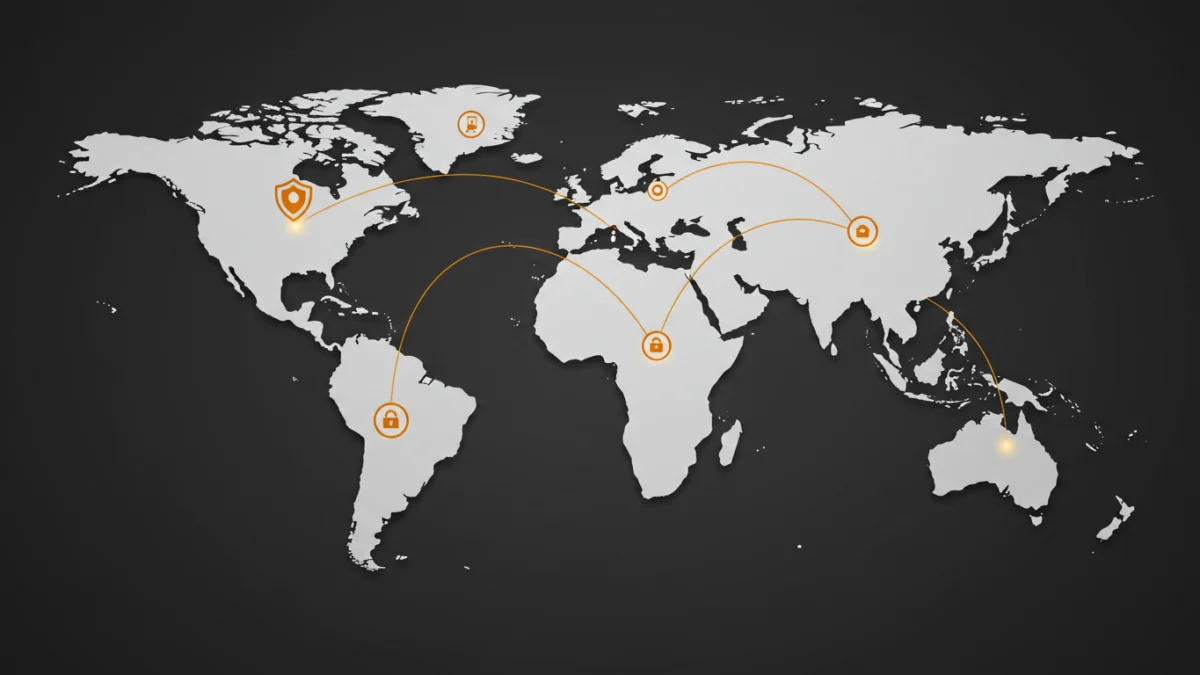
Table of Contents
ToggleNavigating Global Security: IT Consulting for International Compliance & Outsourcing
International Security Frameworks and Regulatory Overlap
Global enterprises must comply with region-specific security frameworks. Requirements vary across GDPR (EU), NIS2 (EU), HIPAA (US), SOC 2 (US), CCPA (California), APRA (Australia), and LGPD (Brazil). Each framework defines obligations for data processing, breach notification, user rights, and controller-processor responsibilities. Conflicts arise when cross-border data transfers trigger contradictory legal requirements, particularly under U.S. surveillance statutes (e.g., FISA 702, CLOUD Act) versus European data protection norms. Regulatory overlap introduces complexity in maintaining unified control environments.
Role of IT Consulting in Cross-Border Compliance Architecture
IT consultants conduct regulatory gap assessments, policy development, technical control mapping, and audit readiness evaluations. They translate legal requirements into actionable security controls. Key deliverables include data flow diagrams, control crosswalks, documentation templates, and evidence collection processes. Engagements often include alignment with ISO 27001 Annex A controls and NIST CSF subcategories. In it consulting international engagements, consultants coordinate local legal interpretations with centralized security strategies.
Outsourcing Information Security Across Jurisdictions
Security outsourcing introduces regulatory obligations under processor-subprocessor relationships. Data processing agreements (DPAs), Standard Contractual Clauses (SCCs), and Binding Corporate Rules (BCRs) define legal safeguards. Recent invalidation of the EU-U.S. Privacy Shield under Schrems II requires additional legal and technical measures for international data transfers.
| Risk Domain | Jurisdiction-Specific Constraint | Mitigation Strategy |
|---|---|---|
| Data Residency | GDPR, LGPD, CCPA | Enforce processing within defined zones |
| Breach Notification | HIPAA (72 hrs), GDPR (72 hrs), APRA | Integrate regulatory timers into SIEM |
| Government Access | FISA 702, CLOUD Act | Encryption, client-side key management |
| Contractual Accountability | NIS2, ISO 27001 clauses | Define SLA, DPA, indemnification terms |
Compliance enforcement depends on service-level reporting, audit rights, and breach notification escalation paths. Consultants assess provider maturity through security questionnaires, certifications (e.g., ISO, SOC 2, CSA STAR), and contractual provisions.
Vendor Risk Assessment and Global Due Diligence
Enterprises must establish repeatable vendor risk assessment processes that cover compliance alignment, control adequacy, data handling procedures, and operational maturity. Third-party security assessments include:
Evaluation of ISO 27001, SOC 2, and regional certifications
Review of incident response plans and data destruction procedures
Verification of subprocessor transparency and service chain mapping
Audit schedule, reporting frequency, and response window definitions
Consultants formalize these assessments through standardized scoring frameworks, vendor tiering models, and continuous reassessment cadence.
Security Control Harmonization Across Legal Boundaries
Control harmonization involves mapping disparate compliance requirements into a unified baseline. Consultants create control crosswalks using authoritative sources (e.g., Cloud Control Matrix, NIST OSCAL profiles). These mappings allow reuse of evidence across audits and ensure coverage of overlapping domains (e.g., access control, encryption, incident handling). Harmonized controls reduce audit fatigue and maintain policy consistency across regional offices.
Control effectiveness must be validated across cloud service models (IaaS, PaaS, SaaS) and hosting environments (on-prem, hybrid, multi-cloud). Consultants define responsibility matrices using RACI models and shared responsibility documentation.
Multi-Region Infrastructure Governance Models
Enterprises require governance models that span regulatory zones. Control planes must enforce region-specific policies without impairing performance or service availability. Cloud-native policies (e.g., Azure Policy, AWS Organizations SCPs) enable geographic control enforcement. SIEM and SOAR systems centralize telemetry while maintaining data residency through log routing and sharding.
Configuration drift detection ensures that deployed environments remain compliant. Consultants implement policy-as-code tooling (e.g., OPA, HashiCorp Sentinel) to automate remediation.
Localization of Incident Response and Notification Procedures
Incident response workflows must account for jurisdictional requirements. Consultants define response playbooks aligned with local notification laws, classify incident severity using regionally accepted taxonomies, and integrate external counsel and PR firms into workflows.
Response timing windows vary:
GDPR: 72 hours to supervisory authority
HIPAA: 60 days to affected individuals
APRA CPS 234: 72 hours to regulator
LGPD: As soon as possible, with justification
Consultants configure SIEM platforms to trigger internal and external notifications when timers are activated. Escalation trees incorporate local DPOs and compliance officers.
International Data Lifecycle Governance
Data lifecycle policies define collection, classification, access, storage, and deletion rules per jurisdiction. Consultants implement tagging strategies using metadata, automate data retention policies through backup lifecycle tools, and enforce deletion via secure wipe or cryptographic erasure.
Key management strategies include hardware security modules (HSMs), bring-your-own-key (BYOK) implementations, and sovereign key hosting per jurisdiction. Logs and backups must adhere to the same data residency constraints as primary datasets.
Strategic Advisory for Global Security Outsourcing
Consultants support outsourcing decisions by assessing provider capabilities, contract terms, compliance alignment, and integration feasibility. Outsourcing information security engagements require RFP support, SLA/KPI definition, and onboarding guidance.
Security posture evaluation includes:
Platform compatibility with internal control frameworks
Evidence generation capacity
Policy enforcement capabilities
Threat detection latency and visibility scope
Advisory output includes provider evaluation matrices, control inheritance documentation, onboarding checklists, and performance tracking templates.
Cross-Border Governance Maturity Assessment
Governance maturity assessments measure the alignment of security programs with regulatory expectations and operational resilience. Consultants use control coverage maps, SLA compliance trackers, audit findings, and business continuity indicators. Assessment output feeds into continuous improvement cycles.
Metrics include:
SLA adherence (e.g., policy application time, log ingestion latency)
Control uptime percentage per geography
Number of unresolved audit findings
Incident response compliance rate
Regulatory change adaptation speed
Assessment reports drive roadmap adjustments and executive security reviews.
FAQ
Enterprises typically align with ISO 27001, SOC 2, GDPR, NIS2, HIPAA, LGPD, and CCPA depending on operational geography.
Consultants conduct gap analysis, create control mappings, prepare audit documentation, and define operational procedures aligned with local and international laws.
Risks include unauthorized data access, jurisdictional conflicts, non-compliant subprocessors, and breach notification failure.
Using region-specific cloud resource provisioning, encryption with jurisdiction-bound key management, and metadata-based data tagging.
SIEM aggregates logs, enforces event classification rules, monitors for region-specific incident patterns, and triggers compliant notification workflows.