
Outstaffing vs Managed Services for Infrastructure: A Practical Hybrid Model Using DevOps and Sysadmin Specialists
Enterprise Infrastructure Services Explained: How Outsourced Server Monitoring Ensures Stability and Security
IT Security Outsourcing Services Explained: Why Firewall Installation Defines the Real Security Boundary
Introduction
Cybersecurity failures rarely occur because organizations lack tools. Most incidents happen because security controls exist without ownership, lifecycle management, or operational accountability. Firewalls are a prime example. They are widely deployed, frequently audited, and often misunderstood.
Many companies treat firewall deployment as a one-time technical task. In reality, firewall configuration defines how traffic flows, how access is restricted, and how incidents propagate across environments. This makes firewall management a governance problem, not a hardware problem. Understanding this distinction is essential when evaluating it security outsourcing services.
The security boundary problem in modern infrastructure
What defines the real security boundary today
In traditional networks, the security boundary was physical and static. Today, infrastructure spans on-premise systems, cloud platforms, SaaS applications, remote endpoints, and third-party integrations. Traffic no longer flows through a single perimeter. It crosses multiple trust zones continuously.
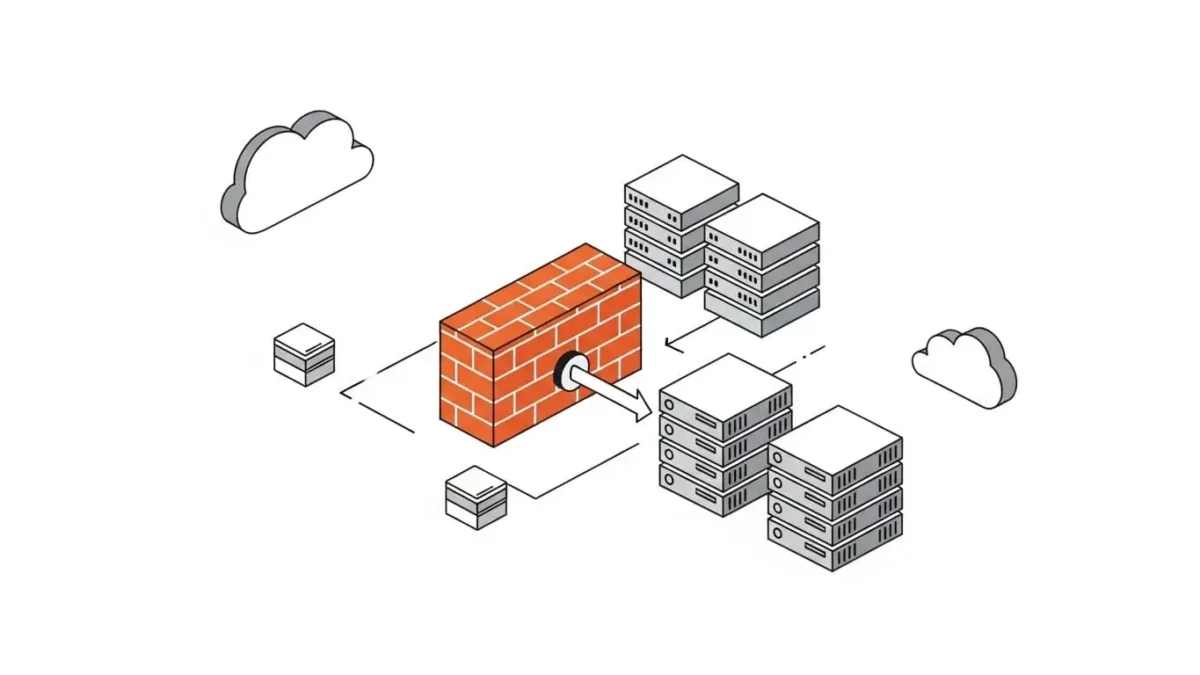
The real security boundary is defined by control enforcement, not topology. Firewalls, access policies, routing rules, and inspection points collectively determine which systems can communicate and under what conditions. When these controls drift or lose ownership, the boundary collapses even if devices remain online.
What IT security outsourcing services actually cover
Beyond tools and alerting
Mature IT security outsourcing services focus on operating models rather than isolated controls. They combine execution, validation, and evidence generation across security domains. This includes network security, identity controls, configuration governance, monitoring, and incident response alignment.
The value of outsourcing lies in consistency. Security controls only work when they follow standardized processes: defined change approval, documented exceptions, rollback planning, and traceable evidence. Without this structure, individual controls lose effectiveness over time.
Why firewall installation is not a one-time task
Configuration drift and operational reality
Firewall rules change constantly. Temporary exceptions become permanent, undocumented rules accumulate, and emergency changes bypass validation. Over time, the firewall no longer reflects the intended security design.
A professional firewall installation service addresses this by treating firewall configuration as a controlled lifecycle. Installation includes baseline design, but long-term security depends on rule ownership, periodic review, and integration with incident and change workflows.
How firewall installation fits into security outsourcing
From technical setup to security control ownership
When firewall installation operates inside an outsourcing model, it gains context. Rules align with application ownership, incident severity models, and business risk classification. Changes follow approval paths, and evidence becomes audit-ready by default.
This integration ensures that firewall rules support security outcomes instead of becoming static artifacts. The firewall evolves alongside infrastructure, rather than lagging behind it.
Risks of treating firewall setup as a standalone service
Where organizations lose control
Standalone firewall projects often fail silently. The device works, traffic flows, and no alerts trigger immediate concern. Problems emerge later during audits, incidents, or lateral movement analysis.
- No clear owner for rule justification
- Emergency changes without expiration
- Missing documentation and rollback paths
- Rules disconnected from application lifecycle
Decision ownership and execution responsibility
Separating risk decisions from technical execution
Firewall rules encode business risk decisions. Which systems can communicate is not a technical preference but a risk acceptance statement. Organizations must retain authority over these decisions while delegating execution and validation.
Effective outsourcing models separate responsibility cleanly: the business approves risk, the provider executes changes, and validation ensures controls behave as intended. This prevents shadow administration and uncontrolled privilege escalation.
What to outsource and what to keep internal
Recommended delegation split
- Outsource rule implementation, validation, and monitoring
- Outsource configuration audits and periodic reviews
- Keep risk acceptance and exception approval internal
- Keep architectural security decisions internal
This split preserves accountability while reducing operational load and improving consistency.
Firewall-centered security governance
Using firewalls as audit and incident anchors
Firewalls provide a natural control point for audits and investigations. When rule changes are logged, reviewed, and linked to tickets, they offer reliable evidence of intent and execution.
Governance should enforce periodic rule reviews, justification tracking, and cleanup of expired exceptions. Without this, the firewall becomes a liability rather than a defense layer.
FAQ
Is firewall installation enough to secure a business network
No. Installation provides a starting point, but security depends on continuous rule management, validation, and governance.
Can firewall management be safely outsourced
Yes, when risk decisions remain internal and execution follows controlled, auditable workflows.
How often should firewall rules be reviewed
Reviews should occur regularly, with additional checks after incidents, infrastructure changes, or major application updates.
What is the difference between firewall setup and firewall operations
Setup establishes the baseline. Operations maintain security over time through monitoring, reviews, and controlled change.
Sources
- NIST Cybersecurity Framework
- CIS Critical Security Controls
- ISO/IEC 27001
© 2026 OutsourceITSecurity. All rights reserved.