
Disaster Recovery Planning: How Enterprises Can Ensure Business Continuity

The Impact of IT Consulting on Digital Transformation: Key Trends and Strategies
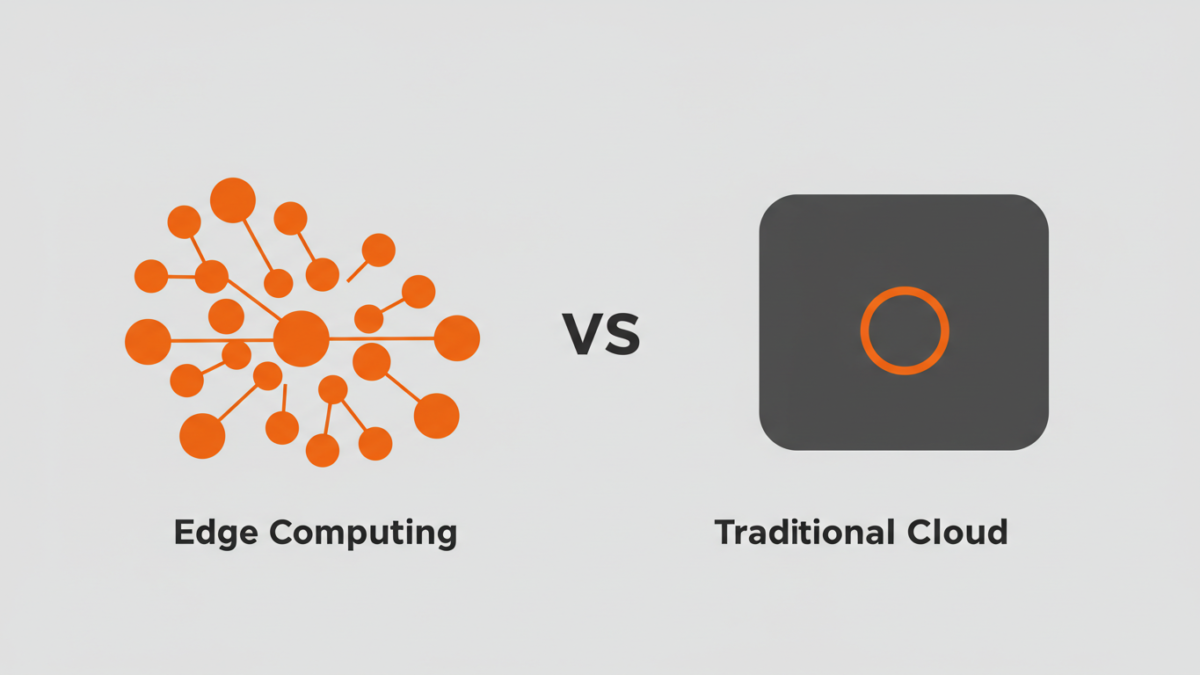
Edge Computing vs. Traditional Cloud: Which Is Best for Enterprise Operations?
Introduction
The digital landscape is evolving rapidly, pushing enterprises to rethink how they process and store data. At the core of this transformation are two competing models: edge computing and traditional cloud architecture. Each offers distinct advantages in terms of performance, security, and scalability, making the choice between them a strategic decision rather than a simple technical preference.
Edge computing decentralizes data processing, allowing enterprises to analyze information closer to its source—whether through IoT devices, sensors, or localized servers. This reduces latency and improves real-time responsiveness. On the other hand, traditional cloud computing relies on centralized data centers that handle large-scale operations, offering enhanced accessibility and resource management across distributed teams.
This article examines these two approaches, comparing their impact on enterprise infrastructure services and exploring how outsourced IT security plays a critical role in ensuring data integrity and threat mitigation.
Understanding Edge Computing
Edge computing is a paradigm shift that moves data processing away from distant cloud centers and into localized environments, such as factory floors, smart grids, or autonomous vehicles. By allowing devices to analyze and act on data independently, edge computing eliminates the delays associated with transferring information to centralized systems.
This method is particularly beneficial for industries that require split-second decision-making. Unlike traditional cloud solutions, which depend on continuous internet connectivity, edge computing enables devices to function autonomously, even in regions with limited network access. The result is a more adaptive and resilient IT infrastructure tailored to real-time operational needs.
Key Benefits of Edge Computing
- Instant Data Processing: Edge computing ensures that critical information is analyzed immediately, reducing the lag that often occurs with cloud-based solutions.
- Enhanced Security & Data Privacy: Since data is processed locally, enterprises minimize the risk of exposure during transmission, protecting sensitive information from cyber threats.
- Optimized Network Traffic: By reducing the amount of data sent to centralized servers, enterprises can prevent bandwidth overload and maintain stable system performance.
- Operational Independence: Devices equipped with edge computing capabilities continue functioning efficiently even in disconnected or remote environments, ensuring uninterrupted workflows.
Edge Computing Use Cases
Industries with time-sensitive applications benefit significantly from edge computing, such as:
- Manufacturing: Real-time monitoring and predictive maintenance for industrial equipment.
- Healthcare: Instant processing of patient data in medical devices for faster diagnostics.
- Retail & IoT: Smart inventory management using edge-enabled devices.
The Role of Traditional Cloud Computing
Traditional cloud computing relies on centralized data centers to handle storage, computation, and networking services. The cloud offers extensive resources and flexibility, making it ideal for large-scale enterprise operations.
Advantages of Cloud Computing
- Scalability: Enterprises can easily adjust resources based on demand.
- Cost Efficiency: Pay-as-you-go models reduce infrastructure investment.
- Robust Data Backup: Secure storage solutions mitigate data loss risks.
- Collaborative Access: Remote teams can access centralized data seamlessly.
Challenges of Cloud Computing
Despite its advantages, cloud computing has limitations:
- Latency Issues: Processing delays occur when transmitting data over long distances.
- Security Concerns: Centralized databases are prime targets for cyberattacks.
- Reliance on Internet Connectivity: Disruptions affect cloud-dependent operations.
Security Implications of Edge and Cloud Computing
Security remains a crucial factor in selecting the right computing architecture. Both edge and cloud introduce unique vulnerabilities that enterprises must address.
Securing Edge Computing
Edge computing minimizes data exposure, but securing dispersed endpoints is complex. Best practices include:
- Endpoint Encryption: Protecting data before transmission.
- Zero Trust Access Controls: Restricting access based on predefined security policies.
- AI-Driven Threat Detection: Identifying anomalies across edge nodes.
Cloud Security Strategies
Due to its centralized nature, cloud security focuses on:
- Multi-Factor Authentication (MFA): Enhancing access protection.
- Data Segmentation: Isolating workloads to reduce risk.
- Continuous Monitoring: Detecting potential breaches through cloud security operations.
The Role of Outsourced IT Security in Enterprise Infrastructure
For enterprises managing both edge and cloud environments, outsourcing IT security can strengthen defenses. Managed security providers offer:
- 24/7 Threat Monitoring: Identifying vulnerabilities across cloud and edge networks.
- Compliance Management: Ensuring adherence to industry-specific security regulations.
- Incident Response Services: Swift mitigation of cyber threats.
Conclusion
Both edge computing and traditional cloud play vital roles in modern enterprise operations. Edge computing excels in real-time processing, while cloud architecture provides scalability and centralized management. Enterprises must assess their security needs, performance goals, and infrastructure demands before selecting the best model. Leveraging enterprise infrastructure services and outsourced IT security can help businesses navigate these choices while ensuring resilience against evolving cyber threats.