IT Security Outsourcing Services: Why Firewall Installation Is a Core Part of Modern Cyber Defense

How Firewall Architecture Impacts Network Security and Performance
Enterprise Infrastructure Services Explained: How Outsourced Server Monitoring Ensures Stability and Security
Introduction
Enterprise infrastructure no longer fails because of missing hardware or insufficient capacity. Modern failures emerge from delayed detection, incomplete visibility, and fragmented operational ownership. Systems appear healthy until performance degrades, dependencies break, or security exposure becomes visible through an incident rather than a signal.
As infrastructure grows across data centers, cloud platforms, and hybrid environments, stability depends less on individual components and more on continuous observation. This is why enterprise organizations increasingly treat monitoring as a core pillar of enterprise infrastructure services rather than a secondary operational task.
Why modern infrastructure demands more than tools
Infrastructure scale increases operational blind spots
Enterprise environments span multiple operating systems, virtualization layers, cloud services, storage platforms, network segments, and identity boundaries. Each layer generates signals, logs, and metrics, but without correlation these signals remain isolated.
Tooling alone does not create reliability. Dashboards without ownership lead to alert fatigue. Metrics without response procedures create noise. Stability emerges only when monitoring outputs connect directly to escalation, remediation, and validation workflows.
Reactive monitoring fails under enterprise load
Reactive monitoring detects failures after impact. In enterprise environments, delayed detection increases blast radius. Small performance degradations can cascade into widespread service disruption if not identified early.
What enterprise infrastructure services really mean
Beyond server management and uptime
Enterprise infrastructure services encompass the operational framework that keeps systems predictable under change. This includes standardization, capacity planning, fault detection, incident coordination, and continuous improvement.
Unlike basic IT support, enterprise services focus on resilience. The objective is not simply to restore services, but to prevent instability from occurring in the first place through early detection and controlled execution.
Key characteristics of enterprise-grade services
- Scalable monitoring across heterogeneous platforms
- Defined service-level objectives and alert thresholds
- Predictable incident response paths
- Audit-ready operational evidence
- Integration with business continuity planning
The role of proactive monitoring in enterprise environments
Why proactive monitoring matters
Proactive monitoring identifies deviation before failure. Capacity saturation, memory leaks, storage latency, backup failures, and configuration drift often present measurable signals long before outages occur.
In enterprise contexts, early detection allows controlled remediation rather than emergency response. This reduces recovery time, limits user impact, and protects data integrity.
Monitoring as a stability mechanism
Monitoring becomes effective only when it influences decisions. Alerts must trigger investigation, remediation, and verification. Without ownership and validation, monitoring remains observational rather than protective.
How outsourced server monitoring fits into enterprise infrastructure services
Extending operational coverage
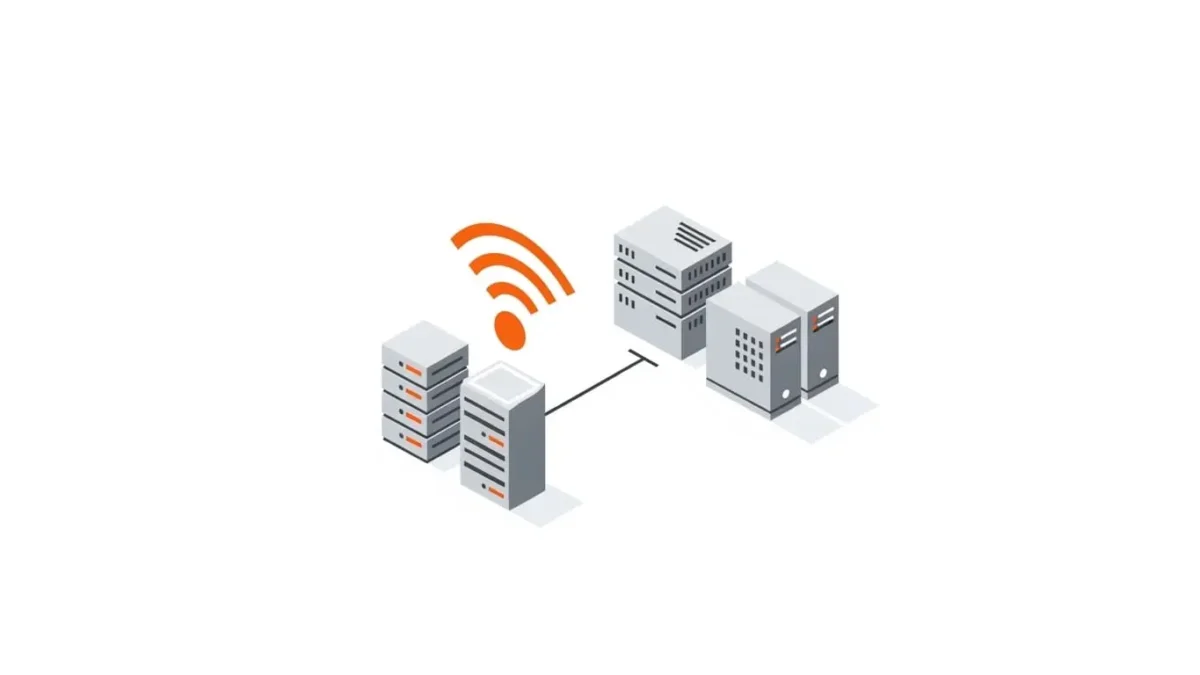
Outsourced server monitoring extends visibility and response capacity beyond internal limitations. It provides continuous observation, structured escalation, and consistent execution across time zones and workloads.
Outsourcing does not remove accountability. Instead, it reinforces it by formalizing detection, response, and documentation processes that internal teams often struggle to maintain consistently.
Monitoring as part of an operating model
When monitoring integrates into enterprise infrastructure services, it aligns with change control, capacity planning, and incident governance. Signals translate into actions, and actions produce measurable outcomes.
Operational targets: stability, availability, predictability
Stability over raw uptime
Enterprise stability means predictable behavior under load and during change. Monitoring tracks leading indicators such as resource utilization trends, error rates, and latency deviations rather than waiting for outages.
Availability with context
Availability metrics gain value when tied to service impact. Monitoring must differentiate between critical and non-critical components to prioritize response effectively.
Predictability as a security factor
Predictable systems reduce security risk. Unexpected behavior often signals misconfiguration, unauthorized change, or emerging vulnerabilities.
Where outsourced monitoring adds strategic value
Continuous coverage without operational fatigue
Internal teams struggle to sustain 24/7 vigilance without burnout. Outsourced monitoring provides continuous coverage with defined escalation paths, ensuring that critical signals receive timely attention.
Standardized response and documentation
External monitoring teams operate under documented procedures. Incidents generate consistent records, supporting audits, post-incident analysis, and long-term improvement.
Risk reduction through early detection
Early detection limits incident scope. Monitoring that identifies anomalies before failure reduces both downtime and recovery complexity.
Integration rules that prevent drift and blind spots
Single workflow principle
Monitoring must feed into one ticketing and escalation system. Parallel workflows create gaps where issues fall between teams.
Defined ownership and validation
Every alert requires an owner. Resolution must include validation that confirms the issue is resolved and does not recur.
Continuous tuning
Alert thresholds and monitoring scope require periodic review. Static configurations lose relevance as infrastructure evolves.
How to choose an outsourced monitoring partner
Operational maturity over tool familiarity
Evaluate providers based on process discipline, escalation clarity, documentation standards, and evidence quality. Tool experience matters less than operational consistency.
Integration capability
The partner must operate inside existing workflows, monitoring platforms, and reporting structures without creating parallel systems.
Decision matrix: internal monitoring vs outsourced monitoring
| Criterion | Internal Monitoring | Outsourced Monitoring | Hybrid Model |
|---|---|---|---|
| Coverage | Limited by staffing | 24/7 continuous | Internal oversight with external coverage |
| Consistency | Variable | Standardized | Governed consistency |
| Response Speed | Depends on availability | Defined by SLA | Optimized escalation |
| Cost Predictability | Variable | Predictable | Balanced |
Governance and metrics that drive performance
Metrics that matter
- Mean time to detect (MTTD)
- Mean time to resolve (MTTR)
- Incident recurrence rate
- Capacity trend accuracy
- Alert-to-action ratio
Using metrics for improvement
Metrics should guide prioritization, not reporting theater. Regular reviews must convert findings into concrete remediation and optimization actions.
FAQ
What is the difference between outsourced server monitoring and managed services
Monitoring focuses on detection and escalation, while managed services often include execution of operational tasks.
Can outsourced monitoring improve security posture
Yes. Early detection of anomalies reduces the window for exploitation and limits incident impact.
How often should monitoring configurations be reviewed
Reviews should occur regularly and after major infrastructure or application changes.
Is outsourced server monitoring suitable for large enterprises
Yes. Large environments benefit significantly from standardized, continuous monitoring coverage.
Sources
- NIST Cybersecurity Framework
- ITIL 4 Foundation
- ISO/IEC 20000
- CIS Critical Security Controls
© 2026 OutsourceITSecurity. All rights reserved.