
Closing the Cybersecurity Talent Gap with Flexible Outstaffing Models

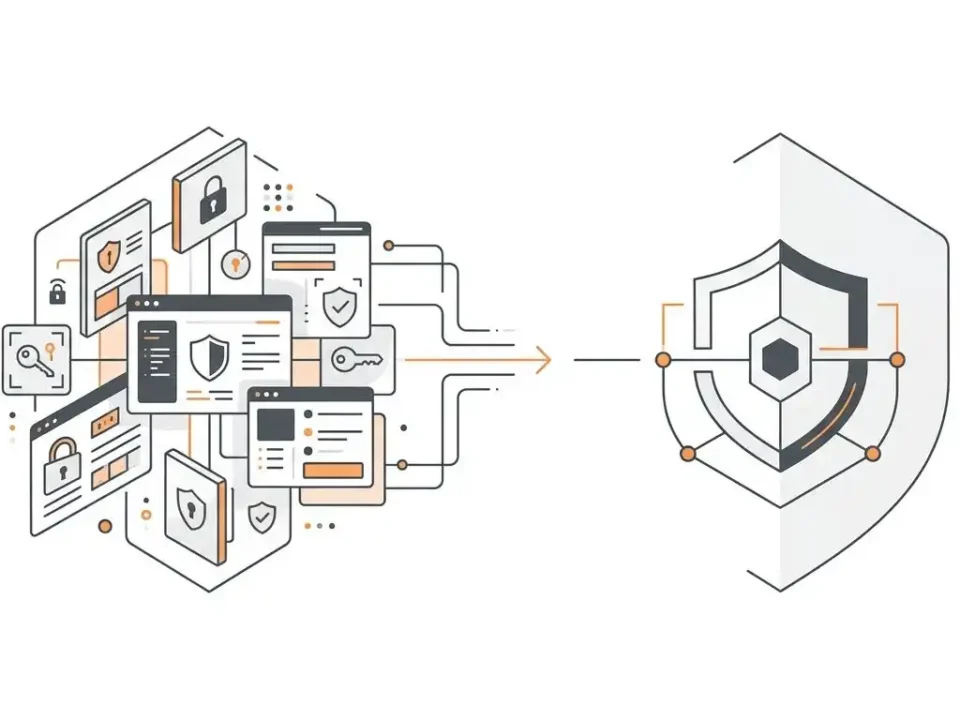
Why Hiring Firewall Experts Is Crucial for Secure and Efficient Firewall Installation

How Outsourcing Network Administration Improves Security and Reduces Operational Costs
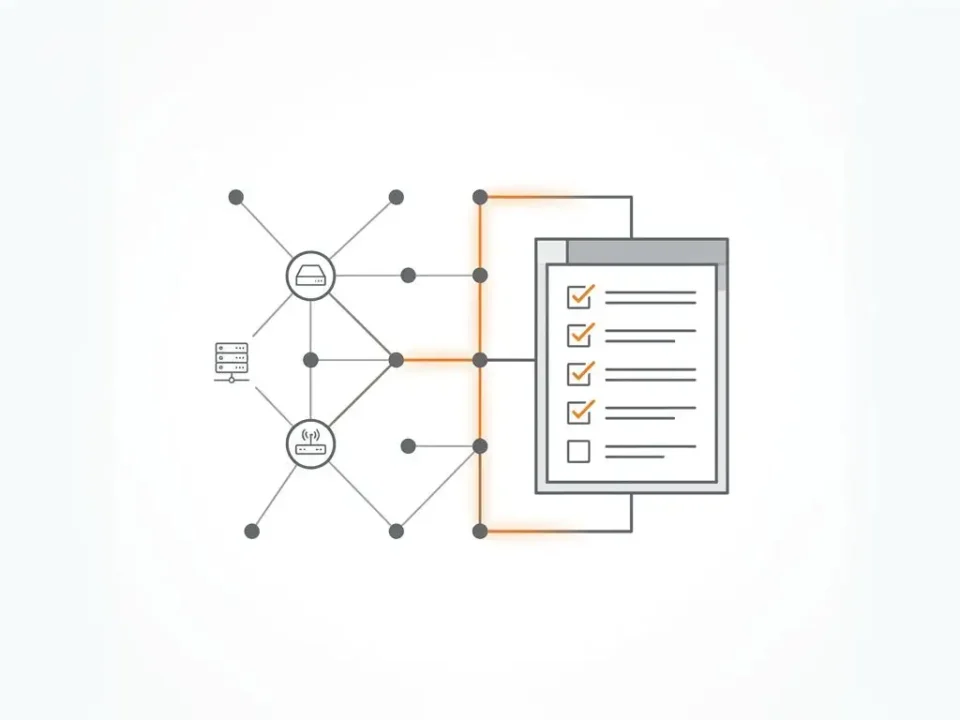
Network administration plays a critical role in securing digital infrastructure, enforcing compliance, and maintaining availability across distributed environments. Enterprises relying exclusively on in-house teams face increasing complexity in managing networks while aligning with evolving cybersecurity standards. Delegating these responsibilities to external specialists offers measurable benefits in both risk mitigation and cost containment.
Role of Network Administration in Enterprise Security
Network administration functions extend beyond switch configurations and user access controls. The discipline encompasses continuous monitoring, segmentation enforcement, firewall rule optimization, and integration of security appliances into broader threat management systems. Administrators implement and audit VLANs, access control lists (ACLs), SNMP configurations, VPN tunnels, and intrusion detection/prevention systems (IDS/IPS). Improper implementation of these elements introduces exploitable attack surfaces.
Enterprises with hybrid or cloud-first environments experience higher volumes of device onboarding, bandwidth allocation adjustments, and segmentation updates. These frequent changes require automated configurations, standardized policies, and regular validation to prevent misconfigurations—one of the leading causes of data breaches.
Security Failures Attributed to Internal Network Mismanagement
Internal network teams often lack the bandwidth or expertise to maintain hardened configurations across all endpoints and devices. This leads to the persistence of default credentials, outdated firmware, misconfigured DNS settings, and disabled logging. Lack of centralized visibility results in blind spots exploited by lateral movement, privilege escalation, or man-in-the-middle attacks.
Studies show that misconfigured firewalls, neglected patching routines, and inconsistent VLAN assignments significantly elevate an organization’s exposure to internal threats. Without formal change management and configuration baselines, even minor administrative errors compromise segmentation policies and lead to data leakage or compliance violations.
Cost Structure of In-House Network Operations
Maintaining internal network administration capabilities requires investment in certified personnel, enterprise-grade monitoring platforms, configuration management tools, and high-availability infrastructure. Mid-sized organizations may lack the economies of scale to justify 24/7 staffing or continuous network telemetry. Redundancy planning for vacation, turnover, and after-hours incidents further increases operational expenditure.
Toolchains for enterprise network management—such as SolarWinds, Nagios, Cisco Prime, and Ansible—require licensing, training, and periodic integration updates. Regulatory frameworks (e.g., NIST 800-53, HIPAA, or PCI DSS) impose additional burdens, requiring that network policies align with control families related to access control, audit, incident response, and system integrity.
Security Advantages of External Network Administration
External network administration providers operate dedicated Network Operations Centers (NOCs) staffed by engineers with specialized domain knowledge and certifications. Outsourced teams apply hardened baseline configurations, enforce privilege separation, and implement automated compliance scanning using industry benchmarks.
Many providers offer zero-trust-ready architecture planning, network microsegmentation, and next-generation firewall (NGFW) integration as part of their core services. These elements significantly reduce lateral movement potential and contain threat propagation. External providers also deliver real-time configuration backups, version control for policy changes, and centralized logs compatible with SIEM platforms.
By engaging network administration services, organizations benefit from standardized processes, reduced misconfiguration risk, and security-enhanced change management practices.
Operational Efficiency Through Outsourced Scalability
Outsourced models introduce predictable, usage-based pricing without the fixed overhead of internal team expansion. Businesses eliminate recruitment, training, and overtime costs while maintaining consistent SLA-driven support. This flexibility allows security teams to reallocate internal resources to high-impact projects such as threat modeling, red teaming, or SOC maturation.
Managed network services optimize hardware refresh cycles, bandwidth utilization, and incident triage without requiring significant capital expenditure. Centralized visibility and automation-driven configurations accelerate incident resolution and reduce mean time to recovery (MTTR).
Integration With Security Compliance Frameworks
External network teams enforce regulatory compliance by embedding audit logging, role-based access controls (RBAC), and network policy enforcement aligned with ISO/IEC 27001, SOC 2, or CIS Controls. They conduct regular vulnerability scans, identify misconfigurations in control planes, and remediate findings before formal audits.
Outsourced administrators apply consistent naming conventions, logging levels, and archival policies, ensuring forensic readiness. They also conduct periodic architecture reviews and rollback testing to validate network resiliency during failover events or breach scenarios.
Performance Metrics for Evaluating Outsourced Services
Decision-makers evaluate outsourced network performance using quantitative metrics such as uptime, configuration drift rate, MTTR, unauthorized change frequency, and incident recurrence rate. SLA adherence, patch latency, and compliance deviation counts serve as indicators of service quality.
Integration with internal teams relies on defined escalation matrices, change window approvals, and secure communications channels. Role delineation between internal IT and outsourced administrators reduces overlap and ensures operational continuity.
Strategic Justification for Security Outsourcing
The growing attack surface, device sprawl, and compliance demands necessitate scalable expertise beyond the capabilities of most internal IT teams. Security outsourcing addresses this gap by combining proactive administration, standardized controls, and transparent accountability.
Organizations seeking resilience, audit readiness, and cost control increasingly favor external network administration as a strategic function—not a support task. This shift enables internal teams to focus on higher-level governance while maintaining hardened infrastructure managed by domain-specific professionals.